#1 Overall Winner
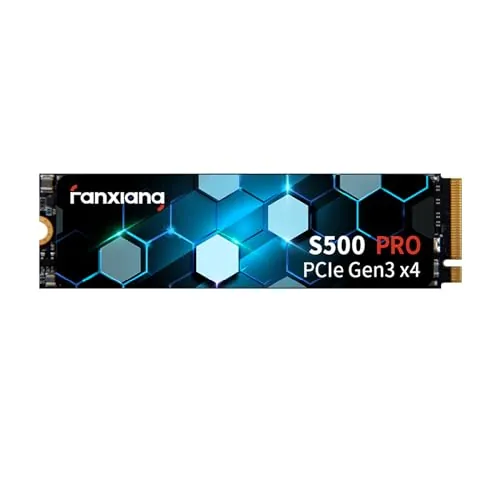
fanxiang S500 Pro 512GB NVMe SSD
- 512GB capacity provides substantially more room for an operating system, applications, games, and files.
Comparison
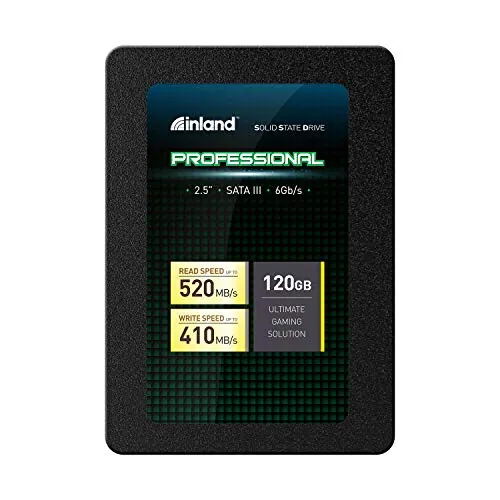
The fanxiang S500 Pro 512GB is a PCIe Gen3x4 NVMe M.2 drive built for much faster transfers and far more storage than the 120GB INLAND Professional SATA SSD. It is the better overall option for a compatible system, while the INLAND is the practical alternative for older computers that require a 2.5-inch SATA drive.
#1 Overall Winner
Contender
Choose the fanxiang S500 Pro for a compatible NVMe system, 512GB of storage, and much higher stated speed. Choose the INLAND Professional only when a 2.5-inch SATA drive is required and the intended workload is light enough for its 120GB capacity.
Overall winner
Depends on your needs
| Feature | fanxiang S500 Pro 512GB NVMe SSD | INLAND Professional 120GB SATA SSD | Winner |
|---|---|---|---|
Drive type |
M.2 2280 PCIe Gen3x4 NVMe |
2.5-inch SATA III |
Depends |
Listed capacity |
512GB |
120GB |
fanxiang S500 Pro 512GB NVMe SSD |
Stated sequential read speed |
Up to 3200MB/s |
Up to 520MB/s |
fanxiang S500 Pro 512GB NVMe SSD |
Stated sequential write speed |
Up to 1300MB/s |
Up to 410MB/s |
fanxiang S500 Pro 512GB NVMe SSD |
Flash and cache details |
3D TLC NAND with SLC cache |
3D TLC NAND |
fanxiang S500 Pro 512GB NVMe SSD |
Endurance information |
Up to 320TBW stated |
Not stated for this 120GB listing |
fanxiang S500 Pro 512GB NVMe SSD |
Installation extras |
Screw and screwdriver included |
No extras listed |
fanxiang S500 Pro 512GB NVMe SSD |
Setup assessment |
Higher supplied setup assessment |
Positive but lower supplied setup assessment |
fanxiang S500 Pro 512GB NVMe SSD |
Reliability assessment |
Higher supplied reliability assessment |
Early-failure and recognition concerns reported |
fanxiang S500 Pro 512GB NVMe SSD |
Best system fit |
NVMe-capable laptop or desktop |
2.5-inch SATA laptop or desktop |
Depends |
Overall assessment |
Higher supplied overall assessment |
Lower supplied overall assessment |
fanxiang S500 Pro 512GB NVMe SSD |
The fanxiang S500 Pro leads performance decisively on the supplied specifications. Its PCIe Gen3x4 NVMe design lists up to 3200MB/s read and 1300MB/s write, compared with up to 520MB/s and 410MB/s for the SATA-based INLAND. That gives the fanxiang more potential for fast boots, game loading, program launches, and larger transfers. The INLAND can still be a substantial improvement over a mechanical hard drive, but it is aimed at basic SATA upgrades rather than high-throughput work.
The fanxiang has the stronger speed assessment and a clear stated-specification lead. Its up-to-3200MB/s read rating is over six times the INLAND’s up-to-520MB/s rating, while its stated write rating is also higher. Review feedback for both products mentions faster booting and responsiveness, but the fanxiang is the more capable option for workloads that benefit from NVMe transfer speed.
Reliability is a caution area for both drives. fanxiang has the higher supplied reliability assessment, and several reviews describe stable operation after months of use, but there are reports of early failure and a drive that would not initialize. INLAND reviews include positive longer-term experiences, but also reports of failures within months, freezing, and Windows recognition issues. Back up important data with either product, particularly before relying on it as a primary drive.
Both drives are generally reported as easy to install and effective at improving everyday responsiveness. The fanxiang has the higher supplied usability assessment and includes a screw and screwdriver, which may help first-time M.2 installers. However, the INLAND may be physically simpler for users replacing an existing 2.5-inch SATA drive. In either case, matching the drive format to the computer is the most important usability factor.
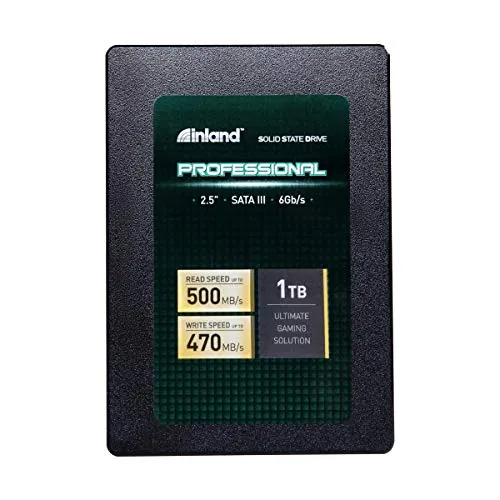
The drives use distinctly different physical designs. The fanxiang is a slim M.2 2280 module intended to mount directly on a compatible motherboard or laptop M.2 slot. The INLAND is a 2.5-inch, 7mm SATA drive intended for a conventional drive bay. The M.2 format is more compact, while the 2.5-inch SATA format is useful for systems built around older storage bays.
Both drives use solid-state flash storage and are designed without the moving parts found in hard drives. fanxiang specifies 3D TLC NAND and graphite heat-dissipation stickers, while INLAND specifies 3D TLC NAND with shock and vibration resistance. The fanxiang receives the higher supplied build-quality assessment, though both datasets contain isolated reports of faulty units. Neither listing provides enough detail for a deeper material or controller comparison.
The fanxiang receives the higher supplied durability assessment and lists a 320TBW rating for this model, along with 3D TLC NAND and heat-dissipation stickers. INLAND lists shock and vibration resistance through its solid-state design and has some reports of long-running use, but the compared 120GB listing does not provide an endurance figure. Both have some negative long-term feedback, so neither should be treated as a substitute for a backup plan.
The fanxiang is the more compact drive, listed at 3.15 by 0.87 by 0.08 inches and 0.06 pounds. The INLAND’s 2.5-inch enclosure is larger at 3.94 by 2.75 by 0.28 inches. Both are internal components rather than portable external drives, but the M.2 format takes less space inside a compatible device.
The fanxiang has the broader listed feature set: SLC cache, 3D TLC NAND, graphite heat-dissipation stickers, a stated 320TBW endurance figure, and included mounting hardware. The INLAND lists 3D TLC NAND and resistance to shock and vibration, but has fewer supplied details around cache, endurance, or bundled installation accessories. Neither drive includes smart or app-based functionality.
Setup feedback favors the fanxiang slightly, with reviews describing it as plug-and-play and easy to install; the package includes a screw and screwdriver. The INLAND also receives positive comments for easy connection and installation. The practical distinction is installation type: fanxiang mounts in an M.2 slot, while INLAND requires a 2.5-inch SATA location plus the correct cables. New users should consult their computer manual before opening the system.
Compatibility depends entirely on the host system. fanxiang lists support for Windows 7, 8, 10, 11 and Mac OS 10.9 and later, provided the computer has the required M.2 interface; reviews still describe mixed compatibility. INLAND supports desktop and laptop PCs using a 2.5-inch SATA connection, but some buyers report Windows 10 recognition problems. Verify the slot type, physical space, BIOS support, and any required mounting parts before ordering.
Connectivity is a format split rather than a universal win. The fanxiang uses PCIe Gen3x4 NVMe 1.4 and requires an M.2 NVMe-capable connection. The INLAND uses SATA III 6Gb/s and requires SATA data and power connections. The fanxiang has the higher supplied connectivity assessment because its interface supports far greater stated throughput, but the INLAND is the compatible choice when a machine only supports 2.5-inch SATA storage.
Both products receive positive supplied power-efficiency assessments, with INLAND slightly higher. The available listing data does not provide measured power consumption, standby draw, or thermal testing, so a definitive real-world efficiency comparison is not possible. The fanxiang does include graphite heat-dissipation stickers, while INLAND emphasizes a no-overheat design claim.
The fanxiang has the higher supplied value assessment because it combines 512GB capacity, NVMe-class stated speeds, installation accessories, and strong setup feedback. That does not make it the automatic choice: it has value only in an NVMe-compatible system. The INLAND can be good value as a basic SATA replacement drive, especially for a light-use older computer, but its 120GB capacity and lower performance ceiling make it less versatile.
The supplied brand-trust assessment is modest for both products, with fanxiang rated somewhat higher. Review feedback shows buyers initially cautious about fanxiang’s lesser-known name but often satisfied with performance. INLAND has feedback from repeat installers and larger deployments, alongside complaints about quality-control inconsistency. The supplied data does not provide sufficient information to compare broader support histories beyond the stated three-year coverage terms.
Both products have a listed 4.6/5 Amazon rating, but the fanxiang has more reviews in the supplied data and the higher customer-satisfaction assessment. Its recurring praise centers on speed, easy installation, responsiveness, and storage value. INLAND buyers often praise its role as a low-cost hard-drive replacement and boot drive, but its feedback includes more recurring caveats about small capacity, recognition issues, and early failures.
Both listings state three-year coverage. fanxiang calls it a three-year quality-assurance service, and INLAND lists a three-year limited parts and labor warranty. The available data does not include turnaround times, return procedures, exclusions, or direct support comparisons. Buyers concerned about failure reports should review current warranty terms and retailer return policies before installation.
The fanxiang S500 Pro is the best overall option in this comparison for a compatible computer. It has the higher supplied overall assessment, more than four times the storage capacity, and a major advantage in stated NVMe read and write speeds. Its SLC cache, listed endurance rating, heat-dissipation stickers, and included installation hardware further strengthen its case as an everyday internal upgrade.
The INLAND Professional remains a reasonable alternative when NVMe is not an option. A 2.5-inch SATA drive can be exactly what an older laptop or desktop needs, and its stated speeds should still make a mechanical-hard-drive system feel faster. Yet the 120GB capacity is limiting, and the supplied feedback suggests avoiding it for demanding write-intensive use. Whichever drive you choose, confirm compatibility first and maintain reliable backups.
Overall winner
Depends on your needs
The fanxiang S500 Pro is the stronger overall choice in the supplied scoring, particularly for performance, speed, setup, value, and customer satisfaction. It also provides 512GB rather than 120GB. However, it only makes sense if the computer supports an M.2 PCIe NVMe drive. The INLAND remains relevant for systems that need a 2.5-inch SATA SSD.
The fanxiang S500 Pro has the clear speed advantage on its stated specifications. It lists up to 3200MB/s read and 1300MB/s write through PCIe Gen3x4 NVMe, while the INLAND lists up to 520MB/s read and 410MB/s write through SATA III. Actual results can vary with the host system, configuration, and workload.
Yes. The compared fanxiang model has 512GB of listed capacity, while the INLAND model has 120GB. That difference matters for a primary drive: 512GB leaves substantially more room for an operating system, programs, games, updates, and personal files. The 120GB INLAND is better suited to a limited boot-drive or light-use role.
Both products receive positive setup feedback, but their physical requirements differ. The fanxiang is an M.2 2280 NVMe drive and includes screws and a screwdriver. The INLAND is a 2.5-inch SATA drive that needs the appropriate SATA data and power connections. Choose based on the slot or bay available in the computer rather than installation score alone.
The INLAND Professional can be the better fit for an older laptop if it has a 2.5-inch SATA drive bay but no compatible M.2 NVMe slot. It is designed as a SATA III replacement drive and reviews note faster startup performance after upgrades. Check the laptop’s drive thickness, bay, SATA connections, and required storage capacity before purchasing.
For a compatible NVMe-equipped computer, the fanxiang S500 Pro is the more suitable option. Its 512GB capacity and much higher stated transfer speeds give it more practical headroom for games and larger files. The INLAND’s 120GB capacity is restrictive, and review feedback indicates it is intended more for light consumer use than demanding, write-intensive work.
Both product datasets include some reliability cautions. A small number of fanxiang buyers report early failure or initialization problems, while INLAND feedback includes early failures, freezing, and recognition issues in some cases. The fanxiang has the higher supplied reliability assessment, but important files should be backed up regardless of which drive is chosen.
Both listings state a three-year term. fanxiang describes this as a three-year quality-assurance service, while INLAND lists a three-year limited parts and labor warranty. The supplied information does not provide full claims procedures or exclusions, so buyers should confirm the current seller and manufacturer terms before purchase.
Check our rankings and expert guides to find the best electronics products for your goals.