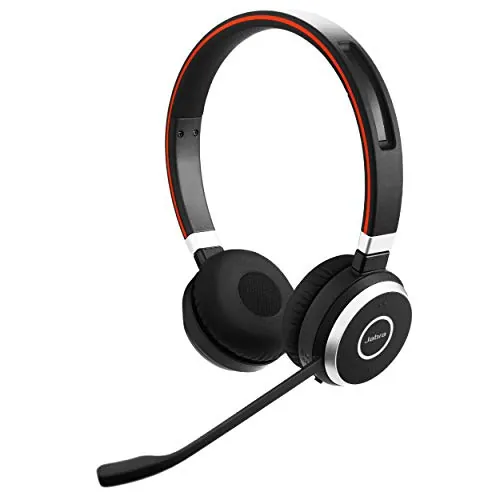
#1 Overall Winner
Jabra Evolve 65 MS Wireless Headset (Stereo) with Link 370
- Strong office/UC focus: certified for Microsoft/Skype for Business and positioned for professional calling.
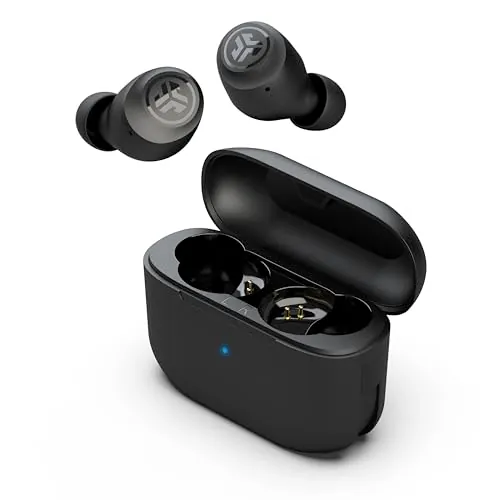
Comparison
The Jabra Evolve 65 MS is a work-focused on-ear headset built around UC calling, a boom mic, and flexible PC connectivity via the included Link 370 adapter. The JLab Go Air Pop is a budget true-wireless earbud set that scores higher overall thanks to long battery life, portability, and value. If your priority is professional calls and desk mobility, the Jabra makes more sense; for everyday listening and commuting, the JLab is usually the better fit.
#1 Overall Winner
Contender
Pick the Jabra Evolve 65 MS if you want a work headset for Teams/Skype-style calling, need PC-friendly connectivity (USB adapter), and care most about microphone performance and desk mobility.
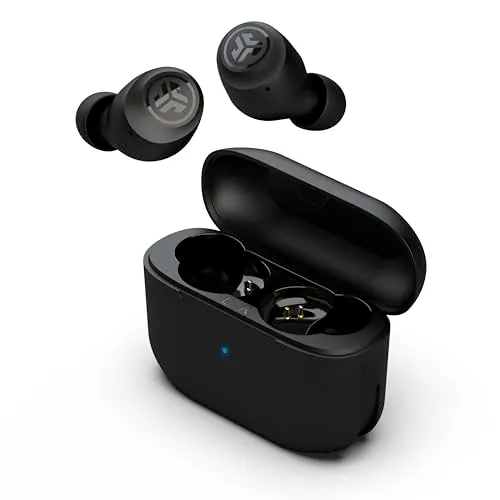
Pick the JLab Go Air Pop if you want inexpensive true wireless earbuds with a small case, very strong total battery life, and an easy everyday carry for commuting, travel, or workouts (IPX4).
Overall winner
Depends on your needs
| Feature | Jabra Evolve 65 MS Wireless Headset (Stereo) with Link 370 | JLab Go Air Pop True Wireless Earbuds | Winner |
|---|---|---|---|
| Overall score | 68 | 82 | JLab Go Air Pop True Wireless Earbuds |
| Best use-case focus | Professional calls / UC headset | Everyday true wireless earbuds | Depends |
| Microphone approach | Boom mic + noise-cancelling mic (call-focused) | MEMS mic in each earbud | Jabra Evolve 65 MS Wireless Headset (Stereo) with Link 370 |
| Battery (spec) | Up to 14 hours talk time; charge while using via USB | 8+ hrs per bud + 24+ hrs case (32+ total) | JLab Go Air Pop True Wireless Earbuds |
| Battery score | 68 | 90 | JLab Go Air Pop True Wireless Earbuds |
| Connectivity options | Bluetooth + Link 370 USB adapter + USB wired | Bluetooth only | Jabra Evolve 65 MS Wireless Headset (Stereo) with Link 370 |
| Dual-device use | PC + one Bluetooth device simultaneously | Dual Connect (either earbud independently) | Depends |
| Wireless range (spec) | Up to 30 m / 100 ft (marketed) | 30 ft (spec) | Jabra Evolve 65 MS Wireless Headset (Stereo) with Link 370 |
| Portability score | 74 | 88 | JLab Go Air Pop True Wireless Earbuds |
| Water resistance | Not water resistant | IPX4 sweat resistance | JLab Go Air Pop True Wireless Earbuds |
| Build quality score | 58 | 72 | JLab Go Air Pop True Wireless Earbuds |
| Durability score | 49 | 70 | JLab Go Air Pop True Wireless Earbuds |
| Customer satisfaction | 4.1/5 (5,935 reviews) | 4.4/5 (57,106 reviews) | JLab Go Air Pop True Wireless Earbuds |
| Setup score | 85 | 74 | Jabra Evolve 65 MS Wireless Headset (Stereo) with Link 370 |
| Value score | 60 | 92 | JLab Go Air Pop True Wireless Earbuds |
In real-world performance, these two excel in different ways. The Jabra Evolve 65 MS performs best when your “performance” metric is call handling: it’s designed for voice, scores well for performance and connectivity, and multiple reviews describe callers hearing them clearly even in noisy environments. The JLab Go Air Pop performs best for everyday listening endurance and convenience, with stronger overall performance scoring and particularly strong battery performance.
If your day is dominated by meetings, the Jabra’s call-centric tuning and headset format can feel more dependable. If your day is dominated by commuting, errands, and casual listening sessions, the JLab’s always-with-you portability and long total playback are the more practical form of performance.
Reliability is mixed for both, but the failure modes differ. The Jabra Evolve 65 MS shows more concern around long-term reliability in the provided scoring and review summaries, with repeated durability complaints and mixed experiences with battery and connection quality.
The JLab Go Air Pop also has mixed reliability feedback—especially around occasional one-earbud issues and connection complaints—but it rates higher on reliability and durability in the provided scores. If you want the safer bet based on the supplied data, the JLab has the edge.
Both products score similarly for usability, but their day-to-day convenience differs. The Jabra Evolve 65 MS tends to be easier in a PC work context thanks to its strong setup scoring, dedicated call controls, and straightforward UC positioning. It also supports charging while using via USB, which is helpful during long workdays.
The JLab Go Air Pop is easier to carry and use casually, with touch controls and the flexibility to use one earbud at a time. However, reviews mention some practical annoyances—especially removing the buds from the case and sometimes needing to disconnect from one device before connecting to another.
Jabra Evolve 65 MS uses an on-ear headset design with a boom mic, which is visually and functionally aligned with meetings and professional calls. This format can make it easier to position the mic consistently, but some users report fit/comfort issues over long periods.
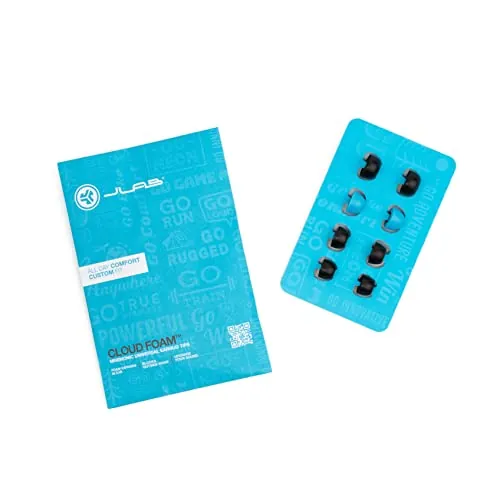
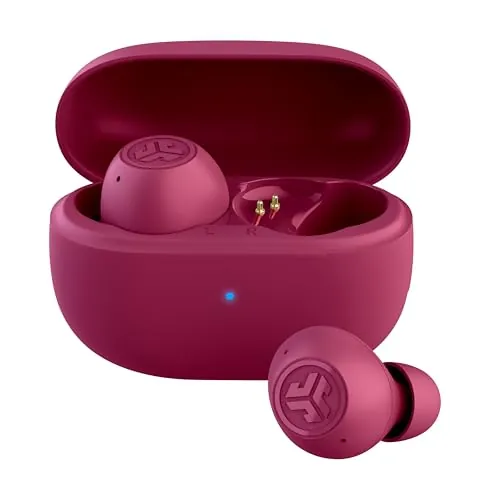
JLab Go Air Pop uses a compact in-ear design with a small pocketable case, aimed at travel and daily carry. It includes multiple tip sizes to improve seal and fit. Design trade-offs include the in-ear feel (not everyone loves it) and the small case making the earbuds harder to grip for removal, as noted in reviews.
Build quality is a key separation. The Jabra Evolve 65 MS has a lower build quality and durability profile in the provided scoring, and the aggregated review summary includes multiple reports of earpieces breaking and headbands cracking. Some reviewers describe the construction as light or flimsy.
The JLab Go Air Pop scores higher for build quality and durability overall. While it still has mixed reliability feedback (including reports of a left earbud not working for some users), the overall pattern from the provided data suggests fewer widespread physical breakage complaints than the Jabra headset.
JLab Go Air Pop rates higher for durability (70 vs 49) and is reviewed as a sturdy, inexpensive set for daily use by many buyers. Jabra Evolve 65 MS has more prominent physical durability complaints, including reports of cracked headbands and broken earpieces. If you expect heavy daily wear and tear, durability is a meaningful point in favor of the JLab based on the provided summaries and scores.
JLab Go Air Pop is significantly more portable: true wireless earbuds, a small pocketable charging case, and strong portability scoring. Jabra Evolve 65 MS is still reasonably portable for a headset (and scores decently there), but it’s a larger on-ear design with a boom mic that’s less convenient to pocket and more noticeable for travel.
Jabra Evolve 65 MS focuses on office productivity features: an integrated busy light, dual connectivity (PC + one Bluetooth device), and an included USB adapter for PCs. It’s also positioned as plug-and-play for UC services and includes call controls.
JLab Go Air Pop focuses on everyday earbud features: a charging case with integrated USB cable, Dual Connect (use one or both earbuds), IPX4 sweat resistance, and three EQ modes selectable from the earbuds (no app required). Feature-wise, it’s more lifestyle-oriented, while the Jabra is more workflow-oriented.
App experience is not a major strength for the Jabra Evolve 65 MS in the provided scoring (low app experience score). The JLab Go Air Pop rates higher for app experience overall, but it also explicitly supports changing EQ modes without an app, which many buyers may prefer. If you want minimal app dependence, the JLab’s onboard EQ controls are a practical advantage.
JLab Go Air Pop offers more “smart” conveniences for an earbud at this tier, including touch controls that can activate a smart assistant and EQ mode switching without an app. The Jabra Evolve 65 MS is more work-function oriented (busy light, call controls) than assistant/consumer smart features, which is reflected in its lower smart-features scoring.
Jabra Evolve 65 MS is the easier choice for many PC-based workstations because it includes the Link 370 USB adapter and is positioned as plug-and-play for UC use, reflected in a higher setup score. JLab Go Air Pop is typically straightforward to pair with phones, but the review summary includes some reports of pairing/connectivity frustrations and extra steps when switching devices.
Both products are broadly compatible with common devices such as smartphones, tablets, and laptops via Bluetooth. The Jabra Evolve 65 MS adds compatibility advantages for work setups by including the Link 370 USB adapter and being positioned for UC integration (certified for Skype for Business/Microsoft-oriented use). The JLab Go Air Pop is a more standard Bluetooth earbud experience and may require disconnecting from one device before pairing to another, according to multiple reviews.
Audio priorities differ between these products. The Jabra Evolve 65 MS is repeatedly described (including in the score interpretation and reviews) as optimized for voice—clear speaking and hearing during calls—while some users find media and music playback only average. The JLab Go Air Pop receives broadly positive feedback for sound quality for its price, and offers three EQ sound settings (Signature, Balanced, Bass Boost) that can help tailor music and podcasts without an app.
If you want audio mainly for meetings, the Jabra’s call-focused sound and mic setup is the advantage. If you want casual music listening with adjustable EQ and a true-wireless fit, the JLab is typically the better match.
Jabra Evolve 65 MS is the more connectivity-focused product: it supports Bluetooth, includes the Link 370 USB adapter for PCs, can also connect via USB cable, and offers dual connectivity (PC + one other Bluetooth device). It also claims significantly longer range than typical earbuds, which fits its “walk around the office/home” intent.
JLab Go Air Pop uses Bluetooth 5.1 with a specified 30-foot range and is praised by many for easy pairing, but the aggregated reviews and interpretation note mixed reports on connection quality and a less seamless experience when switching between devices.
Battery design is one of the biggest differences. The Jabra Evolve 65 MS is specified at up to 14 hours talk time, and it can be charged while in use via USB—useful for long workdays. However, customer feedback on battery is mixed.
The JLab Go Air Pop is specified at 8+ hours per earbud plus 24+ hours from the case (32+ total) and scores very highly for battery life. For most non-call-center users, the case-based “top up as you go” model will feel more convenient and longer lasting overall.
JLab Go Air Pop scores higher for power efficiency and pairs long per-charge use with frequent quick top-ups from the case. Jabra Evolve 65 MS offers the practical advantage of charging while using via USB, but overall efficiency scoring favors the JLab based on the provided data.
JLab Go Air Pop is the stronger value option in the provided data (very high value score and many reviews emphasizing affordability and satisfaction). Importantly, this isn’t only about low price: it also scores very well for battery life, portability, and customer satisfaction.
Jabra Evolve 65 MS offers value when your main need is a professional calling tool—especially if you benefit from the USB adapter, dual connectivity, and call-focused microphone. But value sentiment is mixed, largely due to durability and comfort variability reported by customers.
Both brands score reasonably well for brand trust in the provided data, with Jabra slightly higher on brand trust scoring. However, the warranty/support picture differs: the JLab listing explicitly includes a two-year warranty in the box contents, while the Jabra’s warranty/support score is low and at least one review mentions issues related to invoice/authorized-seller requirements for warranty coverage. Based on the provided information, buyers may feel clearer warranty expectations with JLab.
Customer satisfaction leans toward JLab Go Air Pop, with a higher Amazon star rating (4.4/5) across a much larger review base and a higher customer satisfaction score. Review summaries frequently praise battery life, value, and fit, while noting occasional one-bud or pairing issues.
Jabra Evolve 65 MS still has solid satisfaction overall (4.1/5), and many reviews strongly praise call clarity and connectivity. The most repeated negatives relate to durability and mixed experiences with comfort and battery over time.
JLab Go Air Pop has clearer warranty information in the provided listing, explicitly including a two-year warranty, and it scores higher for warranty/support. Jabra Evolve 65 MS scores low for warranty/support in the provided data, and at least one review mentions difficulty obtaining documentation needed for warranty coverage. If after-sales clarity is important, the provided info favors JLab.
The better overall choice based on the provided scoring is the JLab Go Air Pop. It earns a higher overall score and stands out for battery life, portability, value, and customer satisfaction, making it an easy recommendation for everyday wireless listening on a budget.
However, the Jabra Evolve 65 MS remains the better pick when your main use is work calls and UC-style communication. Its headset form factor, busy light, included Link 370 USB adapter, and dual connectivity are purpose-built for a professional workflow in a way that true wireless earbuds typically are not. If you spend hours in meetings, prioritize mic performance and PC integration—but go in aware of the mixed durability and long-term comfort feedback.
Overall winner
Depends on your needs
On overall scoring, JLab Go Air Pop rates higher (overall score 82 vs 68), driven by battery life, portability, value, and customer satisfaction. Jabra Evolve 65 MS is still the more purpose-built choice for professional calls thanks to its UC focus, boom mic design, and stronger connectivity/setup scoring (including the included Link 370 USB adapter). The better pick depends on whether you prioritize work calls or everyday earbud convenience.
Jabra Evolve 65 MS is the clearer fit for call-heavy work. It’s positioned as a professional headset with an advanced noise-cancelling microphone, a busy light, and certification for Skype for Business/Microsoft-oriented use. Reviews frequently praise call clarity. JLab Go Air Pop can handle calls with its MEMS microphones, but it’s more commonly reviewed as an affordable everyday listening and workout earbud.
JLab Go Air Pop wins on battery life for most buyers. It’s rated very highly for battery (battery life score 90) and is specified at 8+ hours per earbud plus 24+ extra hours from the case (32+ total). Jabra Evolve 65 MS is rated mid-pack for battery (score 68) and is specified at up to 14 hours talk time, with the advantage that you can charge while using via USB.
Jabra Evolve 65 MS is typically the simpler PC-first option because it includes the Link 370 USB adapter and is positioned as plug-and-play for UC use, reflected in a strong setup score (85). JLab Go Air Pop pairs over Bluetooth like most earbuds and many users find it easy, but there are also reports of connection quirks and device switching friction depending on the devices you use.
Jabra Evolve 65 MS is stronger for connectivity overall (connectivity score 82 vs 68) and is marketed with a much longer wireless range (up to 30 meters/100 feet). It also supports dual connectivity (PC plus one other Bluetooth device). JLab Go Air Pop uses Bluetooth 5.1 and is specified at a 30-foot range, with mixed reviews on connection consistency.
JLab Go Air Pop is the better travel companion for most people because it’s truly wireless, very compact, and provides long total runtime via the charging case. It’s also designed around travel use cases in its product details. Jabra Evolve 65 MS can work on the go, but it’s a larger on-ear headset with a boom mic and is more oriented to desk-to-desk mobility than pocketable portability.
JLab Go Air Pop is the safer pick for workouts because it has an IPX4 sweat resistance rating. Jabra Evolve 65 MS is listed as not water resistant, so it’s not ideal for sweaty training sessions or wet conditions. If exercise is a core use case, the JLab’s design and rating better match that environment.
Both can play music, but they’re tuned for different priorities. Jabra Evolve 65 MS is frequently described in reviews as optimized for voice and calls, with media listening considered only “fine” by some users. JLab Go Air Pop gets generally positive feedback for sound quality for the price and includes three EQ modes (Signature, Balanced, Bass Boost) to adjust the sound without an app.
Based on the provided scoring and review summaries, JLab Go Air Pop has better durability/reliability scores overall (durability 70, reliability 67) than Jabra Evolve 65 MS (durability 49, reliability 56). Jabra reviews include recurring reports of physical breakage like headbands cracking or parts breaking. JLab reviews more often mention occasional issues like one earbud not working or case handling difficulties.
JLab Go Air Pop is the stronger value pick in the provided data, with a very high value score (92) and many reviews calling it good value. Jabra Evolve 65 MS has more mixed value feedback (value score 60), in part because some users are very happy with call performance while others report durability or comfort issues that reduce perceived value.
Check our rankings and expert guides to find the best electronics products for your goals.