ElectronicsRanker
Menu

Review

Plantronics Voyager Edge Wireless Bluetooth Headset Review

The Plantronics Voyager Edge is a lightweight, single-ear Bluetooth headset aimed primarily at hands-free calling for business and travel. It performs best for users who value clear call audio, voice controls, easy pairing, and a charging case for longer talk-time coverage. Mixed connection, fit, noise-reduction, and early-reliability feedback keep it from being a straightforward recommendation at its listed price.
Expert reviewed
74
Overall score
Data-driven scoring Expert reviewed Updated analysis

Why we ranked it highly

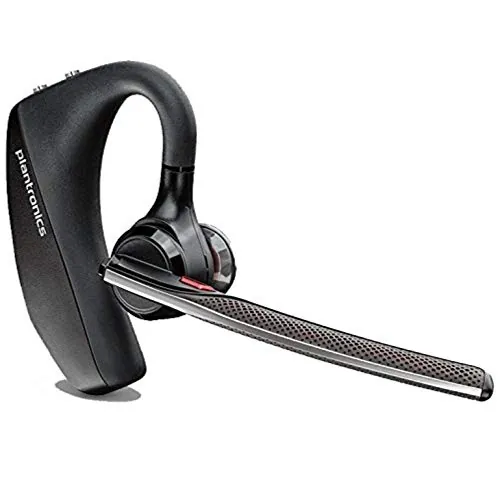
The Plantronics Voyager Edge is a one-ear wireless Bluetooth headset in Carbon Black, designed for calls, spoken navigation, and streamed audio. It pairs through Bluetooth 4.0, supports NFC pairing with compatible smartphones, and is listed as compatible with Bluetooth 4.0-ready phones, computers, and tablets. Its feature set centers on convenience: sensors can answer a call when the headset is worn or redirect audio back to a phone when it is removed, while voice controls allow Answer or Ignore commands. A 9 g weight and three eartip sizes support portable, all-day use. The included charging case is stated to extend talk time to up to 16 hours, compared with up to 6 hours without it. Scores are strongest for features, audio, compatibility, setup, and portability, but customer feedback indicates meaningful variability in Bluetooth stability, fit, wind handling, and long-term reliability.
90-day review Expert reviewed User feedback Data scoring

Key specs

Item details

Brand Name
Plantronics
Model Number
Voyager Edge, Black
Model Name
Voyager Edge, Black
Built-In Media
Charging Case
Age Range Description
Adult
Customer Package Type
Standard Packaging
Number of Items
1
UPC
017229143111
Global Trade Identification Number
00017229143111, 00017229144101, 05033588042020
Manufacturer
Plantronics
Is Autographed
No

Design

Headphones Ear Placement
In Ear
Headphone Folding Features
One-Ear
Earpiece Shape
Rounded tip

Controls

Control Type
Voice Control
Control Method
Voice
Controller Type
Voice Control

Case Battery

Carrying Case Battery Average Life
16 Hours
Carrying Case Battery Charging Time
90 Minutes

Audio

Noise Control
Active Noise Cancellation
Audio Driver Type
Dynamic Driver
Frequency Range
20 Hz - 20,000 Hz

Additional details

Enclosure Material
Metal
Specific Uses For Product
Business
Antenna Location
Calling
Compatible Devices
Connects to all Bluetooth® 4.0 ready devices – phones, computers, tablets and more
Cable Features
Without Cable
Water Resistance Level
Water Resistant
Carrying Case Material
Synthetic material
Additional Features
Noise Cancellation

Connectivity

Headphone Jack
Wireless
Connectivity Technology
Bluetooth
Wireless Technology
Bluetooth
Bluetooth Range
10 Meters
Bluetooth Version
4.0

Style

Color
Carbon Black

Measurements

Item Weight
9 Grams

Battery

Battery Charge Time
90 minutes
Battery Average Life
93 Hours

Scores breakdown

82 /100

Performance

86 /100

Features

78 /100

Usability

80 /100

Design

72 /100

App experience

86 /100

Audio quality

70 /100

Connectivity

82 /100

Battery life

Strengths

  • Strong call-audio score of 86, with several reviewers reporting clear voice transmission.
  • Light 9 g in-ear design with three supplied eartip sizes.
  • Charging case extends stated talk time to up to 16 hours, versus up to 6 hours from the headset alone.
  • Hands-free calling features include wear sensors, spoken Answer or Ignore commands, and caller-ID announcements.
  • Easy initial pairing is supported by an 84 setup score, NFC pairing, and Bluetooth 4.0 support.
  • Broad stated compatibility with Bluetooth 4.0-ready phones, computers, and tablets.
  • P2i nano-coating is stated to help repel moisture on the headset.

Limitations

  • Reliability is the weakest major score at 58, with some customer reports of early failures.
  • Bluetooth stability is mixed: some buyers report easy, dependable connections while others mention disconnections.
  • Noise reduction is inconsistent in reviews, particularly in wind or with vehicle windows open.
  • Fit and comfort vary by ear shape; some users report pain or that the headset can fall out.
  • The charging case adds runtime but is described by some reviewers as bulky.
  • Voice commands can require waiting for prompts to finish and may not work consistently for every user.
  • Warranty and support information supplied for this listing is limited.

Ideal user profiles

  • Drivers and mobile workers who need a lightweight, single-ear headset for calls.
  • Users who value spoken call controls and automatic call handling when putting on the headset.
  • People who want a charging case for longer periods away from a wall outlet.
  • Bluetooth 4.0 device owners seeking compatibility across phones, tablets, and computers.
  • Buyers prepared to test the included eartip sizes to find a secure fit.

Use cases

  • Taking hands-free business calls while commuting.
  • Making and receiving calls from a phone without repeatedly handling the handset.
  • Listening to spoken audio, navigation directions, podcasts, or internet radio.
  • Keeping a call headset charged during travel through the included charging case.
  • Using voice commands for incoming-call handling.
  • Locating a misplaced headset through the Find MyHeadset app feature.

Fit and positioning

Who this works for

Category positioning

The Voyager Edge sits as a feature-led call headset rather than a basic mono earpiece. Its 86 feature score reflects NFC pairing, sensor-based call handling, voice recognition, caller-ID announcements, and a charging case, while its 86 audio score makes it well aligned with voice-call priorities. At 102.87, it is not positioned as a low-cost option. The 74 overall score places it as a useful but qualified choice: its convenience features and low weight are attractive, but a 58 reliability score and mixed customer reports make it less compelling for buyers who need maximum dependability.

Best for

The Voyager Edge is best suited to drivers, mobile professionals, and frequent callers who want a discreet single-ear design and less phone handling. Its 82 performance score, 86 audio score, 84 setup score, and 86 portability score support that role. It is especially practical for users who will make use of spoken call controls, wear sensors, Bluetooth 4.0 compatibility, and the charging case. Buyers should still test the supplied eartips for a secure fit.

Not best for

This headset is less suitable for buyers who cannot tolerate Bluetooth dropouts, need consistently strong wind-noise handling, or require proven long-term durability. The 58 reliability score is a major caution, and the review overview includes reports of early failure. It may also be a poor match for people who are sensitive to in-ear fit, since comfort and stability are mixed across reviews. Buyers focused on low purchase cost may find the 102.87 price difficult to justify given the 68 value score.

Performance analysis

How it performs in practice

Each scoring dimension is separated into a compact card so the strengths and tradeoffs are easier to compare without reading one long block.

Performance analysis

The Voyager Edge scores 82 for overall performance and is primarily optimized for calls. Its stated wideband audio support and Plantronics audio technology are paired with an 86 audio-quality score. Reviewers frequently report clear speech for both listener and caller, including while commuting or around general background noise. Performance is not equally dependable in all conditions: some reviewers specifically say wind noise remained problematic, including in a vehicle with windows down. It is therefore better viewed as a strong everyday call headset than a guaranteed solution for severe outdoor noise.

Feature analysis

An 86 feature score reflects an unusually broad hands-free toolkit for a mono headset. The Voyager Edge offers voice-based Answer or Ignore commands, caller-ID announcements, smart sensors that react to wear status, NFC pairing with compatible smartphones, selectable voice-alert languages, and Find MyHeadset functionality through a compatible smart device. It can also stream music and directions. These are practical call-management features, though user feedback suggests voice recognition may occasionally be slower or less consistent than simply using a physical control.

Usability analysis

The Voyager Edge earns a 78 usability score. Smart sensors can reduce steps by answering calls as the headset is put on and returning audio to the phone when it is removed. Multiple reviewers describe straightforward pairing and convenient daily operation, while the light form factor is easy to keep nearby. The trade-off is that physical fit and voice-control timing are not universally intuitive. Some users need time to learn placement and controls, and voice commands may require waiting for the caller-ID prompt to finish.

Design

The Voyager Edge receives an 80 design score and emphasizes discreet, low-weight practicality. At 9 g, it is much lighter than many full headphones, and its rounded in-ear format can be worn in either ear with one of three supplied eartip sizes. Review experiences are divided: several users say it is light, stable, and easy to forget while worn, while others report ear pain, a loose fit, or discomfort from the hook. Its design is practical, but fit testing matters more than the specification alone.

How it compares

Within the single-ear Bluetooth headset category, the Voyager Edge stands out more for call-management features than for basic wireless connectivity alone. The combination of a charging case, sensor-based audio routing, caller-ID announcements, spoken response options, NFC pairing, and headset-location functionality is comprehensive. Its 9 g weight also supports better portability than larger headsets. Compared with the category expectations implied by its price, though, its inconsistent Bluetooth feedback and 58 reliability score are important disadvantages. It is best judged as a feature-rich voice headset with strong reported clarity, not as the safest choice for users who need faultless connection stability or durable long-term use.

Ranking summary

The Plantronics Voyager Edge earns a 74 overall score because it combines strong call-oriented capability with notable ownership risks. Its best results are feature score 86, audio-quality score 86, portability score 86, compatibility score 84, setup score 84, and battery-life score 82. Those scores align with its practical strengths: a 9 g design, charging case, sensor automation, voice call handling, and Bluetooth 4.0 device support. It ranks lower than a more consistently dependable call headset would because connectivity reaches only 70, value is 68, durability is 65, and reliability falls to 58. It is a well-equipped option, but not a low-risk one.

Buying advice

Consider the Voyager Edge if your priority is hands-free calls and you will benefit from the charging case, 6-hour stated headset talk time, wear sensors, and spoken call controls. It is particularly relevant for Bluetooth 4.0-ready phones, tablets, and computers, provided you verify the functions you need on your particular device. Before buying, check the seller's return and warranty terms because support information is limited and reliability feedback is mixed. Also test all three eartip sizes promptly, since secure fit and comfort vary. Avoid it if wind-heavy calling, zero-tolerance connection stability, or low upfront cost is your main priority.
74
Overall score

Final verdict

The Plantronics Voyager Edge is a strong-featured but qualified option in the single-ear Bluetooth headset category. Its main strengths are clear reported call audio, a very light 9 g design, broad Bluetooth 4.0 compatibility, easy setup, smart call controls, and a charging case that extends stated talk time to up to 16 hours. Its principal limitation is ownership consistency: connection behavior, noise reduction, fit, and especially reliability receive mixed feedback, reflected in the 58 reliability score. Buyers who prioritize hands-free calling and can purchase with a clear return policy may find it useful; buyers needing maximum dependability should be cautious.
Back to review

Key topics

Plantronics Voyager Edge review, Plantronics Voyager Edge Bluetooth headset, Voyager Edge wireless headset ranking, Plantronics single-ear headset review, Bluetooth headset with charging case, business call headset comparison, Voyager Edge call quality, Plantronics Voyager Edge value

Frequently asked questions

Is the Plantronics Voyager Edge worth buying?
The Voyager Edge is a capable but mixed-value single-ear Bluetooth headset. Its 74 overall score is supported by strong call-audio, feature, battery, compatibility, setup, and portability scores. However, a 58 reliability score, mixed Bluetooth feedback, and the supplied price of 102.87 mean it makes most sense for buyers who specifically value hands-free call controls and the charging case.
Is the Plantronics Voyager Edge good for phone calls?
Call use is the Voyager Edge's strongest role. It earns an 82 performance score and an 86 audio-quality score, while several reviewers describe clear conversations and positive feedback from people on the other end. Results in wind and heavier background noise are less consistent, so its noise-reduction performance should not be assumed to be equally strong in every environment.
How long does the Plantronics Voyager Edge battery last?
Plantronics states up to 6 hours of talk time from the headset and up to 16 hours with the charging case. The case is listed with a 90-minute charging time, and customer feedback includes positive comments about runtime and the convenience of carrying reserve power. Actual endurance will depend on how the headset is used.
Is the Plantronics Voyager Edge easy to set up?
Initial setup appears to be one of its better areas, reflected in an 84 setup score. The supplied details list Bluetooth 4.0 and NFC tap-to-pair support, and several reviews describe pairing as quick or straightforward. Long-term connection stability is a separate concern, as other buyers report intermittent disconnections after setup.
Does the Plantronics Voyager Edge work with computers and tablets?
The supplied compatibility information says the Voyager Edge connects with Bluetooth 4.0-ready phones, computers, tablets, and other devices. Its compatibility score is 84, indicating a broad intended device range. Before buying, confirm that the specific device supports Bluetooth 4.0 and that its calling or media functions behave as required with a mono headset.
What are the main limitations of the Plantronics Voyager Edge?
The main limitations are reliability, connection consistency, fit variation, and inconsistent noise reduction. Reliability scores 58, and the review overview notes reports of some units stopping work after two weeks. Some users also report painful or insecure fit, Bluetooth disconnects, and reduced call clarity in wind. Warranty and support details are not provided here.
Is the Plantronics Voyager Edge comfortable to wear?
Comfort is highly individual. The headset weighs 9 g and includes small, medium, and large eartips; several reviewers call it light, secure, or comfortable for extended use. Conversely, the review overview includes complaints of pain and slipping, while one reviewer found the hook uncomfortable. Trying the included tips is important before relying on it for long shifts.
Does the Plantronics Voyager Edge have useful smart features?
Yes. The headset's 83 smart-features score reflects wear sensing that can answer calls when it is placed in the ear or redirect audio when removed, spoken Answer or Ignore controls, caller-ID announcements, and Find MyHeadset support through a compatible smart device. Voice-command responsiveness is mixed in reviews, so button control may remain preferable for some users.

Related Guides & Rankings