#1 Overall Winner
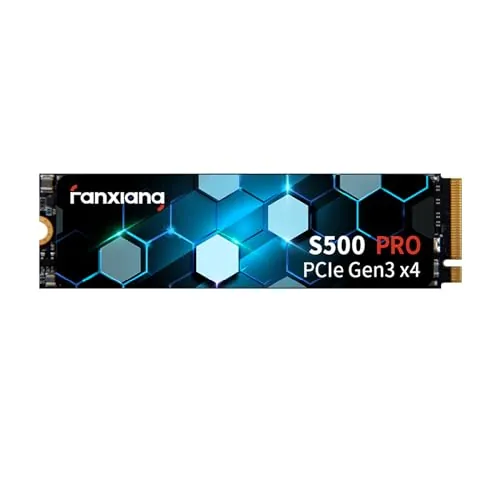
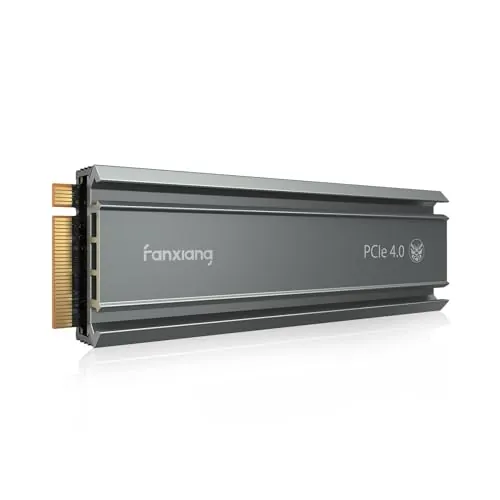
fanxiang S500 Pro 512GB NVMe SSD
- PCIe Gen3x4 NVMe interface with stated sequential speeds up to 3200MB/s read and 1300MB/s write.
Comparison
The fanxiang S500 Pro and G-Technology ArmorATD solve different storage problems. The fanxiang is the stronger choice for fast internal storage in a compatible PC, while the ArmorATD prioritizes 5TB portable capacity and rugged physical protection. Overall scoring favors the fanxiang, but travelers and large-file backup users may prefer the ArmorATD.
#1 Overall Winner
Contender
Choose the fanxiang S500 Pro for a compatible M.2-equipped PC where fast everyday storage matters. Choose the G-Technology ArmorATD for large portable archives and travel use where rugged construction and 5TB capacity outweigh speed.
Overall winner
Depends on your needs
| Feature | fanxiang S500 Pro 512GB NVMe SSD | G-Technology 5TB ArmorATD | Winner |
|---|---|---|---|
Storage type |
Internal M.2 NVMe SSD |
Portable mechanical hard drive |
Depends |
Capacity |
512GB |
5TB |
G-Technology 5TB ArmorATD |
Stated transfer performance |
Up to 3200MB/s read; 1300MB/s write |
130Mb/s stated transfer rate |
fanxiang S500 Pro 512GB NVMe SSD |
Connection |
PCIe Gen3x4 NVMe M.2 |
USB-C / USB 3.1 |
Depends |
Installation |
Internal installation |
External connection |
G-Technology 5TB ArmorATD |
Setup score |
Higher |
Lower |
fanxiang S500 Pro 512GB NVMe SSD |
Physical protection |
No rugged rating provided |
IP54, shock and crush protection stated |
G-Technology 5TB ArmorATD |
Portability |
Very compact internal module |
Portable external drive |
Depends |
Reliability score |
Higher |
Lower |
fanxiang S500 Pro 512GB NVMe SSD |
Build quality |
Graphite heat sticker; polycarbonate enclosure |
Rugged multi-layer enclosure |
G-Technology 5TB ArmorATD |
Value score |
Higher |
Lower |
fanxiang S500 Pro 512GB NVMe SSD |
Overall score |
Higher |
Lower |
fanxiang S500 Pro 512GB NVMe SSD |
The fanxiang S500 Pro is the clear performance choice for compatible internal systems. Its NVMe interface and stated sequential speeds are intended to improve boot, application, game-loading, and file-transfer tasks. The ArmorATD is a mechanical external drive; it offers much more capacity, but its stated transfer rate and mixed speed reviews make it a better fit for bulk storage than frequent high-speed work.
The fanxiang has the decisive speed advantage. It receives the higher speed score and is rated up to 3200MB/s read and 1300MB/s write. The ArmorATD's mechanical design and stated 130Mb/s transfer rate are better aligned with capacity-oriented storage. Customer feedback for its transfers is divided, reinforcing that it should not be chosen primarily for speed.
Neither product is free of reliability concerns. The fanxiang has the higher reliability score, and many reviews report stable operation, but some buyers describe early failures. The ArmorATD has a lower reliability score, with repeated reports of drives failing, not being recognized, or disconnecting. Important data should be kept in more than one location regardless of the drive selected.
The fanxiang scores better for usability and setup, and reviewers often describe it as easy to install. This advantage applies only after confirming M.2 compatibility and opening the computer. The ArmorATD is more convenient to connect externally, but its usability score is lower and reviews mention formatting friction, recognition issues, and cable-related disconnections.
These designs are purposefully different. The fanxiang is an extremely compact M.2 2280 board intended to disappear inside a compatible computer. The ArmorATD is a 0.35kg portable drive intended to be carried between devices, with a protected enclosure and USB connection. Choose internal minimalism with the fanxiang or standalone portability with the ArmorATD.
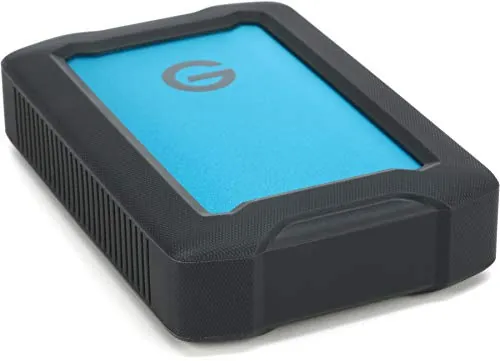
The ArmorATD wins on physical construction. Its triple-layer shock resistance, IP54 enclosure, and stated 1000-pound crush rating are directly relevant to transport and field use. The fanxiang has a lightweight polycarbonate enclosure and a graphite heat-dissipation sticker, appropriate to its internal SSD role, but it is not designed as an all-terrain portable drive.
The ArmorATD is the better durability choice because its design specifically targets outdoor and travel hazards. It is rated for rain and dust resistance and has stated shock and crush protection. The fanxiang benefits from solid-state construction with no internal mechanical mechanism and is described as shock resistant, but it lacks the ArmorATD's rugged external-protection claims.
Both products are portable in different ways. The fanxiang is physically much smaller and lighter, but it must be installed inside a computer or enclosure to be used. The ArmorATD is a self-contained external drive designed to carry between systems and has the higher portability score, although its 0.35kg weight and rugged housing add bulk.
The fanxiang focuses on storage performance features: PCIe Gen3x4 NVMe connectivity, SLC cache, 3D NAND TLC, and a graphite heat-dissipation sticker. The ArmorATD focuses on external-drive practicality: a USB-C-ready connection, 5TB capacity, and protection against rain, dust, shock, and crushing. Neither product has a meaningful smart-feature or companion-app advantage in the supplied data.
The fanxiang has a clear setup-score advantage and includes a screw and screwdriver. Reviews commonly characterize installation as simple, provided the computer supports the needed M.2 connection. The ArmorATD requires no internal installation, but formatting instructions, system recognition, and cable behavior can complicate first use for some buyers.
The fanxiang is listed as compatible with Windows 7, 8, 10, 11 and Mac OS 10.9 or later, but requires a motherboard with an M.2 interface. The ArmorATD is ready for Mac and Windows and connects externally through USB, though users report some formatting and recognition problems. The fanxiang has the higher compatibility score, but both purchases require a hardware and format check.
The fanxiang uses an internal PCIe Gen3x4 NVMe 1.4 M.2 connection, making interface compatibility essential. The ArmorATD uses USB 3.1 Type-C and is stated to be USB 3.0 and Thunderbolt 3 compatible, which is more flexible for external use across devices. However, the ArmorATD's connectivity score is lower, and reviews include complaints about recognition and cable fit.
The fanxiang has the higher power-efficiency score, consistent with its compact solid-state design. The provided data does not give detailed power-consumption figures for either product, so a direct energy-use calculation is not possible. The ArmorATD's mechanical architecture prioritizes capacity and rugged external storage rather than the SSD's efficiency-oriented internal form factor.
The fanxiang earns the higher value score because the supplied data pairs strong NVMe performance, easy installation, included hardware, and high customer satisfaction. The ArmorATD offers a different kind of value: substantially more capacity and a rugged enclosure. Its value proposition is strongest for users who will use the 5TB space and physical protection, not for buyers seeking fast transfers.
WD/G-Technology has the higher brand-trust score in the supplied data, while fanxiang's score is lower as a lesser-known brand. However, brand score alone does not settle the comparison: the ArmorATD's review data includes notable failure and cable complaints, while the fanxiang has generally positive installation and performance feedback alongside some early-failure reports.
The fanxiang has the higher customer-satisfaction score and a 4.6/5 rating across 6,028 reviews. Feedback regularly highlights speed, simple installation, and value. The ArmorATD has a 4.5/5 rating across 2,811 reviews, with praise for its rugged build and capacity, but its satisfaction picture is weakened by recurring reports of failures, recognition problems, and cable issues.
The fanxiang provides a stated three-year quality assurance service and receives the higher warranty-support score. The supplied ArmorATD data does not state warranty terms, and its warranty-support score is lower. Buyers considering either drive should verify current support and return conditions with the seller before purchase, especially given the reported reliability concerns.
The fanxiang S500 Pro is the best overall option in this comparison because it has the higher overall score and substantially better performance, speed, setup, usability, and value results. For a compatible laptop or desktop, it is the more logical choice when storage responsiveness matters. Its 512GB capacity is adequate for a focused internal upgrade, though it is not a replacement for a large archive drive.
The G-Technology ArmorATD remains the better specialist choice for buyers who need 5TB of portable storage and rugged physical protection. It is more appropriate for transporting large media collections or maintaining an external backup library, provided speed is secondary. Its lower reliability score, mixed compatibility feedback, and cable complaints mean buyers should test it promptly and use a separate backup strategy for irreplaceable files.
Overall winner
Depends on your needs
The fanxiang S500 Pro is the stronger overall choice in the provided scoring because it leads on performance, speed, setup, value, and overall score. It is the better match for a compatible computer needing fast internal storage. The ArmorATD is the more suitable choice when 5TB capacity and rugged portable protection matter more than transfer speed.
The fanxiang S500 Pro is clearly the faster option on the supplied specifications. It uses a PCIe Gen3x4 NVMe interface and is rated for up to 3200MB/s read and 1300MB/s write speeds. The ArmorATD is a mechanical USB external drive with a stated 130Mb/s transfer rate, and its speed feedback is mixed.
The G-Technology ArmorATD provides substantially more capacity: 5TB compared with 512GB for the fanxiang S500 Pro model reviewed here. That makes the ArmorATD more practical for large photo collections, footage, backups, and media libraries. The fanxiang is better suited to faster operating-system, application, game, or project storage.
For a computer with a compatible M.2 slot, the fanxiang S500 Pro has strong setup feedback and includes a mounting screw and screwdriver. Reviews often describe installation as straightforward. Buyers should still confirm that their laptop or desktop has the required M.2 PCIe interface, because compatibility feedback is not completely uniform.
The ArmorATD is the more travel-focused product. Its portable enclosure is specified with IP54 rain and dust resistance, triple-layer shock resistance, and a 1000-pound crush rating. Reviews often call it sturdy and travel-friendly. Because there are reports of cable and reliability issues, important files should remain backed up elsewhere.
The ArmorATD is the more natural backup drive because its 5TB external format offers much more space and can be connected by USB. The fanxiang can also store backups, but its 512GB capacity and internal M.2 installation make it more appropriate as active system or application storage. Neither should be the only copy of important data.
The ArmorATD has the stronger durability case on the provided data. It has a higher durability score and specific protection claims for shock, rain, dust, and crush resistance. The fanxiang has no moving mechanical parts and includes a heat-dissipation sticker, but it is not presented as a rugged external drive.
Yes. The fanxiang has mostly positive feedback but some reports of early failure. The ArmorATD has more serious reliability concerns in the supplied review summary, including spontaneous failures, recognition issues, and cable-related disconnections. For either product, maintain a separate backup of important files and test the drive during the return period.
Check our rankings and expert guides to find the best electronics products for your goals.