#1 Overall Winner
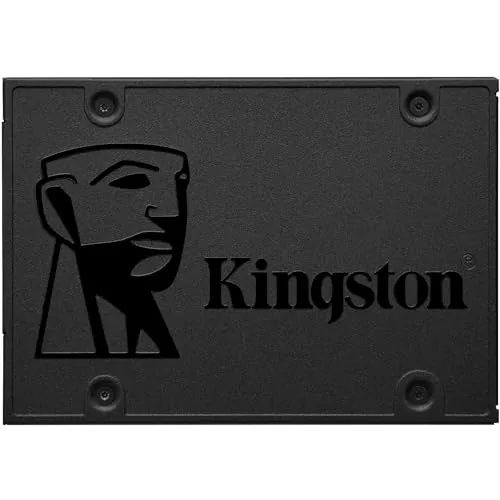
Kingston 240GB Q500 SATA3 2.5 SSD
- 240GB capacity provides twice the storage of the 120GB A400 in this comparison.
Comparison
The Kingston Q500 240GB and Kingston A400 120GB are affordable 2.5-inch SATA SSDs designed to replace slower mechanical hard drives. The Q500 is the better all-round option for buyers who need more capacity and stronger reliability confidence, while the A400 is a compelling lower-cost OS-drive choice with strong setup, speed, and value results.
#1 Overall Winner
Contender
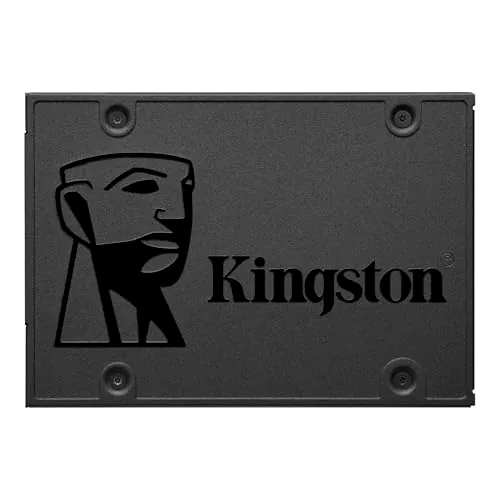
Choose the Q500 240GB for more usable storage and stronger reliability confidence. Choose the A400 120GB for a budget OS-drive upgrade in a light-use desktop or laptop, provided 120GB is enough and you are comfortable with the mixed long-term reliability feedback.
Overall winner
Depends on your needs
| Feature | Kingston 240GB Q500 SATA3 2.5 SSD | Kingston 120GB A400 SATA 3 2.5 Internal SSD | Winner |
|---|---|---|---|
| Capacity | 240GB | 120GB | Kingston 240GB Q500 SATA3 2.5 SSD |
| Form factor | 2.5-inch SATA | 2.5-inch SATA | Tie |
| Maximum listed read speed | 500MB/s | 500MB/s | Tie |
| Listed write speed | Not consistently listed in main specifications | Up to 450MB/s | Kingston 120GB A400 SATA 3 2.5 Internal SSD |
| Overall result | Higher supplied overall result | Slightly lower supplied overall result | Kingston 240GB Q500 SATA3 2.5 SSD |
| Speed | Strong supplied speed result | Higher supplied speed result | Kingston 120GB A400 SATA 3 2.5 Internal SSD |
| Reliability | Stronger supplied reliability result | Lower result; some early-failure reports | Kingston 240GB Q500 SATA3 2.5 SSD |
| Setup and usability | Straightforward SATA installation | Higher supplied setup and usability results | Kingston 120GB A400 SATA 3 2.5 Internal SSD |
| Compatibility | PC, laptop, listed gaming-console use | Desktop and laptop | Kingston 240GB Q500 SATA3 2.5 SSD |
| Customer feedback | 4.6/5 from 9,746 reviews | 4.7/5 from 28,572 reviews | Kingston 120GB A400 SATA 3 2.5 Internal SSD |
| Value | More capacity and strong reliability | Lower listed price and higher value result | Depends |
| Listed price | 63.38 | 31.36 | Kingston 120GB A400 SATA 3 2.5 Internal SSD |
Both drives are designed to make systems feel substantially more responsive than they would with a mechanical hard drive, and both list up to 500MB/s read speed. The A400 has the higher supplied performance and speed results and specifies up to 450MB/s write speed, supported by reviews that mention fast booting and loading. The Q500 remains a strong everyday SATA performer, with feedback describing fast, stable operation. For sustained or demanding storage work, neither should be treated as a substitute for a higher-tier NVMe drive.
The A400 leads on the supplied speed result. It specifies up to 500MB/s read and 450MB/s write, and customer feedback frequently notes much faster boot and load times after replacing a hard drive. The Q500 also lists up to 500MB/s read and earns a strong speed result, making it suitable for everyday SATA upgrades. The difference is not a reason to overlook capacity: the Q500's 240GB is much more accommodating than the A400's 120GB.
The Q500 is the clearer choice for reliability based on the supplied results. Its reliability assessment is much stronger, and review feedback emphasizes stable use over time. The A400 has many satisfied owners and a very large positive review base, but the aggregated review summary identifies reports of drives failing in less than six months. Those reports do not mean every A400 will fail, but they are a relevant consideration for important data or longer-term use.
The A400 has the stronger supplied usability result. Its reviews repeatedly describe a simple installation process, successful OS migration, and immediate improvements in responsiveness. The Q500 is also a standard, accessible 2.5-inch SATA upgrade with positive laptop-upgrade feedback. In either case, installation ease depends on the computer having a compatible SATA bay and the required cable, bracket, or screws.
This is effectively a tie on physical design. Both drives use a slim 2.5-inch internal format intended to fit compatible laptop and desktop drive bays. The Q500 lists a 41g weight, while the A400 is listed at 0.09 pounds; both are lightweight. The practical design decision is capacity rather than form factor: the Q500 gives buyers 240GB in the same style of drive.
Both products are compact solid-state drives without moving parts and share near-identical listed dimensions. The Q500 has the higher supplied build-quality result and specifies shock resistance. The A400 is also described as more resistant to shock and vibration than a mechanical hard drive. Available data does not establish a major material or enclosure-quality advantage beyond the Q500's modest scoring lead.
The Q500 has the higher supplied durability result, while its shock-resistant specification supports mobile-computing use. The A400 also benefits from a no-moving-parts design and is described as more resistant to shock and vibration than a hard drive. However, the A400's lower durability and reliability results, alongside reports of early failures, give the Q500 the advantage for buyers placing greater weight on long-term confidence.
Both are lightweight internal drives with the same listed 3.94 by 2.75 by 0.28-inch dimensions, so neither has a meaningful advantage for physical portability once installed. The A400 has the higher supplied portability result, but they are not standalone portable drives without a separately purchased external enclosure. For travel use, an enclosure, cable, and host-device compatibility will matter more than the small difference in drive weight.
Neither drive is feature-heavy; both are straightforward internal SATA SSDs. The Q500 specifies TLC storage and shock resistance, and it lists compatibility with gaming-console use in addition to PCs and laptops. The A400 emphasizes fast startup, loading, and file transfers, plus a cooler and quieter solid-state design compared with a mechanical drive. The A400 leads in the supplied feature result, but the Q500's extra capacity is the more practical difference for many users.
The A400 has the stronger supplied setup result. Reviews mention successful Windows installation, OS migration, and straightforward replacement of existing drives. The Q500 is likewise an internal 2.5-inch SATA drive suited to conventional upgrades, but the supplied feedback is less focused on installation. Neither listing confirms that mounting screws, cables, or migration accessories are included, so buyers should check their computer and planned installation method.
Both drives are intended for standard SATA-equipped computers. The Q500 lists PC and laptop platforms and names gaming-console compatibility, with business, gaming, multimedia, and personal use cases. The A400 lists desktop and laptop compatibility for business, gaming, and personal use, and states backward compatibility with SATA Rev. 2.0. Choose only after confirming the system supports a 2.5-inch SATA drive and has suitable mounting provisions.
Both drives connect through SATA and use a 2.5-inch internal form factor. The Q500 lists SATA 3.0Gb/s and SATA 6.0Gb/s hardware connectivity, while the A400 lists SATA 6.0Gb/s and states backward compatibility with SATA Rev. 2.0. The Q500 has a slight edge in the supplied connectivity result and broader listed device compatibility, including gaming-console use. Actual compatibility still depends on the host device's physical bay and SATA connection.
Both SSDs should be more suitable than mechanical hard drives for a quiet, low-motion storage upgrade, and both receive strong supplied power-efficiency results. The A400 is described as cooler and quieter than a hard drive, while Q500 review feedback mentions low heat during longer use. The supplied data does not provide comparable power-consumption figures, so there is no decisive efficiency winner.
The A400 has the higher supplied value result and a much lower listed price, making it a sensible option when 120GB is enough for an operating system and essential programs. The Q500 costs more but provides double the capacity and stronger supplied reliability and durability results. As a result, the A400 is better value for a tightly constrained, light-use upgrade, while the Q500 may represent better long-term value for buyers who would otherwise outgrow 120GB or prioritize reliability.
Both products come from Kingston, so there is no brand-level distinction to make. The Q500 has a slightly stronger supplied brand-trust result, but both benefit from the same established manufacturer and extensive buyer feedback. The decision should rest on the individual model's capacity, supplied reliability assessment, and intended use rather than a difference in brand reputation.
The A400 has the higher supplied customer-satisfaction result, a 4.7/5 rating, and 28,572 reviews, compared with the Q500's 4.6/5 from 9,746 reviews. A400 buyers frequently praise the boot-time and responsiveness improvements, as well as installation ease. The Q500 also has strong customer satisfaction, with feedback highlighting stable, fast everyday use. The key caveat is that the A400's feedback includes some early-failure complaints.
The Q500 has the stronger supplied warranty-and-support result. One provided Q500 review refers to a three-year warranty, but warranty terms can vary by seller and region. The available A400 data does not state comparable warranty terms, and its supplied support result is lower. Buyers should verify the current seller-specific warranty, return window, and support process before purchase.
The Kingston Q500 240GB is the best overall option in this comparison. It has a slightly stronger supplied overall result, twice the capacity of the A400, and a substantial advantage in supplied reliability confidence. Those benefits make it a more balanced choice for most people upgrading an older laptop, desktop, or compatible system with a SATA SSD.
The Kingston A400 120GB remains a sensible alternative for a tightly budgeted operating-system upgrade. It has a lower listed price, excellent setup and usability feedback, strong speed results, and an exceptionally large base of positive customer reviews. However, 120GB fills quickly, and the supplied review summary includes early-failure reports. Pick the A400 only when your storage needs are genuinely light; otherwise, the Q500's additional capacity and stronger reliability profile justify choosing it.
Overall winner
Depends on your needs
The Kingston Q500 240GB is the stronger overall choice in the supplied scoring because it combines a slightly higher overall result with much stronger reliability results and twice the capacity. The Kingston A400 120GB remains compelling for a lower-cost, basic OS-drive upgrade, especially where its easier setup and stronger value results matter most.
Yes. The Q500 in this comparison provides 240GB, while the A400 provides 120GB. That extra space makes the Q500 more practical for an operating system, applications, updates, documents, and a modest amount of additional local storage. The A400 is more restrictive and is best suited to essential software or cloud-focused use.
Both drives list read speeds of up to 500MB/s, so their headline SATA read specification is the same. The A400 has a higher supplied speed result and specifies up to 450MB/s write speed. However, either drive is aimed at a conventional SATA upgrade rather than the higher performance tier associated with NVMe storage.
Both can be suitable if the laptop accepts a 2.5-inch SATA drive. Choose the Q500 240GB when the laptop needs more breathing room for applications and local files. Choose the A400 120GB for a low-cost operating-system upgrade where storage needs are minimal. Check the laptop's drive bay, SATA connection, and mounting hardware before ordering.
The Q500 has the stronger supplied reliability and durability results, and its review summary emphasizes stable everyday use. The A400 receives extensive positive feedback for performance and successful installation, but its aggregated review data also includes reports of failures within six months. That makes the Q500 the more cautious choice when reliability is the primary deciding factor.
The A400 leads in the supplied usability and setup results. Reviews frequently describe it as working out of the box and being easy to install or migrate to. The Q500 is also a standard internal 2.5-inch SATA drive and has positive everyday-upgrade feedback, but buyers should verify whether their system already has the required SATA cable, bracket, and screws.
It can be enough for an operating system and essential applications, particularly on a cloud-based or light-use computer. However, the provided feedback identifies 120GB as a limited capacity. Users who keep games, large applications, media, or many files locally will generally find the Q500's 240GB capacity more practical.
The A400 has a higher supplied value result and a lower listed price, making it attractive for a basic, small-capacity upgrade. Value is not only about initial cost, though: the Q500 supplies double the capacity and stronger reliability results. The better value therefore depends on whether the buyer can work comfortably within 120GB and accepts the A400's reliability trade-off.
Check our rankings and expert guides to find the best electronics products for your goals.