#1 Overall Winner
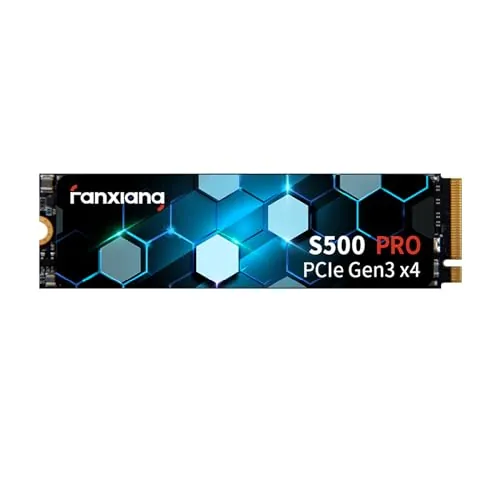
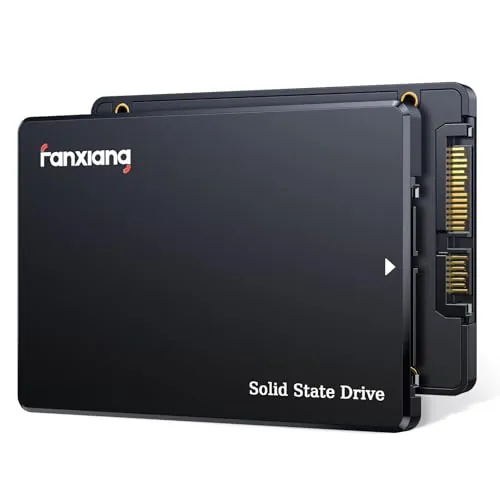
fanxiang 512GB SATA SSD S101Q
- Up to 560MB/s read and 490MB/s write specifications for a SATA SSD.
Comparison
The fanxiang S101Q is a 512GB 2.5-inch SATA SSD aimed at compatible laptop and desktop upgrades, while the fanxiang S660 is a 2TB PCIe 4.0 NVMe M.2 SSD built around PS5 and compatible PC storage expansion. The S101Q leads on overall score and value, but the S660 is the clear choice for PS5 compatibility, greater capacity, and much higher stated speed.
#1 Overall Winner
Contender
Choose the S101Q for a compatible laptop or desktop SATA upgrade, especially when practical value and an easy hard-drive replacement matter most. Choose the S660 for a PS5 or compatible PCIe M.2 PC when 2TB capacity, higher stated transfer speeds, and the included heatsink are priorities.
Overall winner
Depends on your needs
| Feature | fanxiang 512GB SATA SSD S101Q | fanxiang S660 PCIe 4.0 2TB SSD | Winner |
|---|---|---|---|
| Compared capacity | 512GB | 2TB | fanxiang S660 PCIe 4.0 2TB SSD |
| Interface | SATA III 6Gb/s | PCIe 4.0 NVMe, PCIe x4 | fanxiang S660 PCIe 4.0 2TB SSD |
| Stated speed | Up to 560MB/s read; 490MB/s write | Up to 5000MB/s transfer rate | fanxiang S660 PCIe 4.0 2TB SSD |
| Primary fit | Compatible 2.5-inch SATA computers | PS5 and compatible M.2 PCIe PCs | Depends |
| PS5 expansion | Not applicable | Specifically described as PS5 compatible | fanxiang S660 PCIe 4.0 2TB SSD |
| Cooling | No heatsink stated | Pre-installed heatsink | fanxiang S660 PCIe 4.0 2TB SSD |
| Overall score | 80 | 76 | fanxiang 512GB SATA SSD S101Q |
| Usability score | 88 | 86 | fanxiang 512GB SATA SSD S101Q |
| Feature score | 70 | 80 | fanxiang S660 PCIe 4.0 2TB SSD |
| Reliability score | 68 | 64 | fanxiang 512GB SATA SSD S101Q |
| Value score | 86 | 76 | fanxiang 512GB SATA SSD S101Q |
| Stated service coverage | 3-year after-sales service | 5-year quality assurance | fanxiang S660 PCIe 4.0 2TB SSD |
The S660 is the performance-oriented choice. Its PCIe 4.0 NVMe connection and stated up-to-5000MB/s transfer rate far exceed the S101Q's stated 560MB/s read and 490MB/s write figures. For PS5 game storage or a compatible PCIe 4.0 PC, that bandwidth advantage is meaningful for transfers and storage-heavy tasks. The S101Q remains a capable SATA upgrade for faster boot and application response versus an HDD, but it is constrained by the SATA interface.
The S660 wins decisively on stated speed. It is rated up to 5000MB/s, versus up to 560MB/s read and 490MB/s write for the S101Q. The S101Q has a slightly higher speed score in the supplied scoring, which reflects its strong performance within the SATA category, but it should not be interpreted as faster than the PCIe 4.0 S660 in raw transfer capability.
The S101Q has a modest lead in reliability score. Its reviews are largely positive, but the aggregated feedback includes some early failures and capacity-related complaints. The S660 has more serious caution flags in the supplied review overview, including multiple reports that the drive died after one week. One review also challenged the stated TLC description for a 4TB variant. Back up important files with either product, particularly before relying on it for sole-copy data storage.
Both drives score well for usability and receive positive comments about installation. The S101Q is slightly ahead in the usability score and is a straightforward choice where a 2.5-inch SATA bay already exists. The S660 also has strong setup feedback, particularly from PS5 users, but installation depends on access to a compatible M.2 slot and ensuring heatsink clearance. Neither drive requires the same physical installation process.
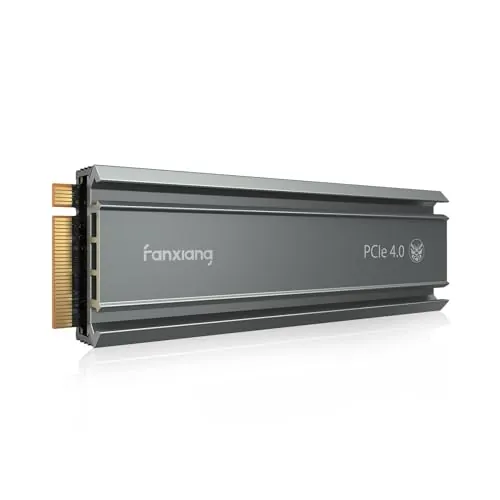
The designs are purpose-specific. The S101Q is a thin 7mm, 2.5-inch SATA drive weighing 1.6 ounces, suited to systems built around that familiar storage bay. The S660 is a compact M.2 module with a heatsink, made for a PS5 expansion bay or a compatible desktop M.2 slot. The S101Q is more practical for legacy SATA hardware; the S660 uses space more efficiently in modern M.2-equipped systems.
The S101Q has the higher build-quality score and uses a polycarbonate enclosure in a 2.5-inch drive format. It is also stated to be shock resistant. The S660's physical advantage is its integrated heatsink, intended to help keep temperatures low during prolonged intensive use. However, the S660 has the lower build-quality score, so the supplied information does not support treating the heatsink as proof of stronger long-term hardware durability.
The S101Q has the higher durability score and states shock resistance, which is relevant for an internal drive in a portable computer. The S660's heatsink is designed for low temperatures during prolonged usage, but its lower durability score and reports of early failures weaken its long-term case. The available feedback is mixed for both products, so neither should be selected without a separate backup plan.
Neither is a portable drive on its own; both are internal storage products. The S101Q weighs 1.6 ounces and can be used in a SATA-to-USB enclosure according to a review, while the S660 is a 30-gram M.2 module. The S101Q has the slightly higher portability score, but an enclosure, cable, and host compatibility would be needed for external use.
The S101Q focuses on practical SATA-drive features: 3D NAND, SLC cache, TRIM, S.M.A.R.T., ECC, RAID support, garbage collection, wear leveling, and stated shock resistance. The S660 adds platform-specific advantages for gaming, including PS5 positioning, a PCIe 4.0 NVMe M.2 form factor, 2TB capacity, and a pre-installed heatsink. The S660 therefore has the broader feature set for high-performance gaming storage, while the S101Q is more focused on conventional SATA upgrades.
The S101Q has the slightly higher setup score and is repeatedly described as simple to install in compatible computers. The S660 is also rated highly for setup, with reviewers reporting that PS5 installation and recognition were straightforward. Before buying, check the computer's slot type or follow PS5 installation guidance, because the drive form factors and connections are different.
Compatibility is a split decision. The S101Q is appropriate for devices with a 2.5-inch SATA connection and is stated to support Windows, Linux, and Mac OS. The S660 is appropriate for a PS5 expansion bay and compatible PCIe M.2 PCs. Both score equally for compatibility, but neither can substitute for the other where the device has only one of these interface types.
The S101Q connects through SATA III 6Gb/s and is stated to be backward compatible with SATA II and SATA interfaces. It supports Windows, Linux, Mac OS, laptops, desktops, and all-in-one computers. The S660 uses PCIe 4.0 through PCIe x4 and is described as compatible with PS5 and PCs. Both have the same compatibility score, but the S660's interface offers greater bandwidth; the S101Q covers a broader range of older SATA-based machines.
The S101Q has the higher power-efficiency score. Its supplied information emphasizes SATA operation and shock resistance but does not provide power-consumption figures. The S660 is intended to remain at low temperatures during prolonged intensive use through its heatsink, but no direct energy-use specifications are provided. A definitive real-world power comparison cannot be made from the available data.
The S101Q leads on value score and has the lower listed price, while review feedback frequently characterizes it as good value for a SATA upgrade. The S660's value proposition is different: its higher-capacity 2TB configuration, PCIe 4.0 performance, PS5 suitability, and included heatsink can justify its role for the right system. It is not better value simply because it has more capacity; buyers should pay for its advantages only if their platform can use them.
Both products are from fanxiang, so the comparison is primarily model-specific rather than brand-to-brand. The S101Q receives the higher brand-trust score, while the S660's lower score reflects concerns in its feedback, including early-failure reports and a disputed flash-type claim on one variant. The brand scores do not remove the need to verify the exact listing, capacity, and service terms.
Both products have strong star ratings and substantial review counts: the S101Q has 4.5 out of 5 from 5,646 reviews, and the S660 has 4.6 out of 5 from 3,650 reviews. The S101Q has the slightly higher customer-satisfaction score, with praise centered on ease of installation, speed, and value. S660 buyers often praise PS5 use, capacity, speed, and the heatsink, but the reported early failures are a notable counterweight.
The S660 has the higher warranty-support score and states five-year quality assurance, as well as five-year EU spare-part availability. The S101Q states three years of after-sales service and lifetime technical support. The S660 therefore has the longer stated coverage period, while the S101Q explicitly mentions ongoing technical assistance. Confirm local eligibility, exclusions, and claim procedures before purchase.
The fanxiang S101Q is the best overall option in this comparison according to the provided scores, particularly for users upgrading a compatible SATA-based computer. It combines solid SATA-class stated speeds, broad system compatibility, straightforward installation, and a higher value score. It is not, however, the right drive for every buyer. The fanxiang S660 is the better technical match for PS5 storage expansion and compatible PCIe 4.0 PCs, where its 2TB capacity, M.2 NVMe interface, included heatsink, and much higher stated transfer rate matter more than the overall-score difference. The key decision is not simply which drive is better, but which connection your device supports. Reliability feedback is mixed for both, and notably weaker for the S660, so use routine backups and confirm the exact model details before committing important data.
Overall winner
Depends on your needs
The S101Q has the higher overall score and is the stronger general choice for a compatible 2.5-inch SATA upgrade. The S660 is the better fit when a compatible PCIe M.2 slot or PS5 expansion bay is available, because it combines 2TB capacity, an included heatsink, and far higher stated transfer speed.
No. The S101Q is a 2.5-inch SATA SSD, while the S660 is an M.2 PCIe 4.0 NVMe SSD specifically described as compatible with PS5. A PS5 owner should choose the S660 only after confirming the console expansion-bay installation requirements and available physical clearance.
The S660 is substantially faster on its stated specifications. It lists a transfer rate of up to 5000MB/s, compared with the S101Q's stated read speed of up to 560MB/s and write speed of up to 490MB/s. The actual benefit depends on having a compatible PCIe 4.0 M.2 platform.
Both products score well for setup and have positive installation feedback. The S101Q is a practical option for systems with a compatible 2.5-inch SATA bay, while the S660 is reported to be easy to fit in a PS5 but requires access to the M.2 expansion slot. Compatibility determines which installation is simpler.
The compared S660 configuration provides 2TB, four times the 512GB capacity of the S101Q configuration. That makes the S660 more suitable for a large PS5 or PC game library. The S101Q can still be sufficient for an operating-system upgrade, everyday applications, and more modest file storage.
The S101Q has the higher value score and a lower listed price, but the drives are not direct capacity or interface matches. Choose it for a compatible SATA system and practical everyday upgrading. Choose the S660 when PS5 support, 2TB capacity, PCIe performance, and the included heatsink are requirements.
Yes. The S101Q has a better reliability score, but its review overview includes some reports of early failure and capacity-related concerns. The S660 scores lower for reliability and durability, and multiple buyers reportedly experienced failure after a week. Keep important data backed up regardless of the drive selected.
The S660 has the stronger warranty-support score and states five-year quality assurance, along with five-year EU spare-part availability. The S101Q states three years of after-sales service plus lifetime technical support. Buyers should confirm the applicable terms and support process for their region before ordering.
Check our rankings and expert guides to find the best electronics products for your goals.