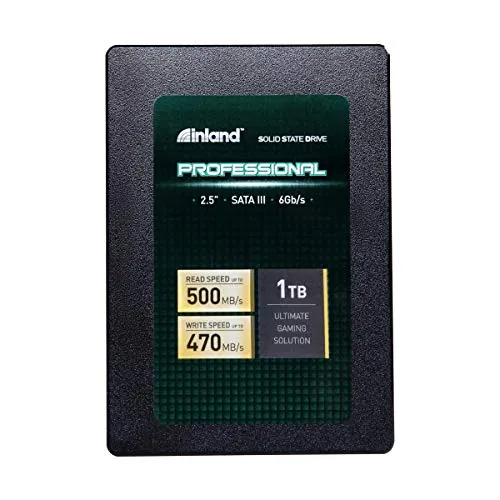
#1 Overall Winner
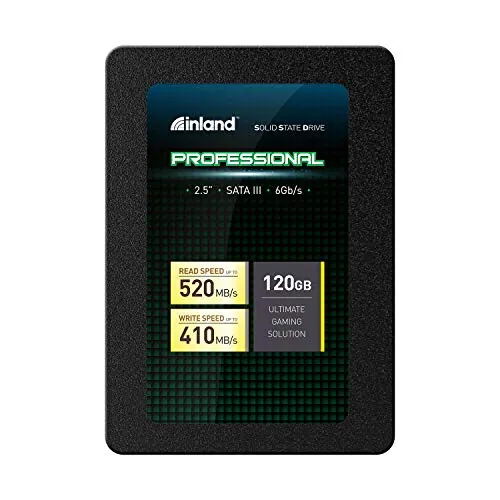
INLAND Professional 120GB SSD
- 120GB 2.5-inch SATA III SSD suited to desktop and laptop upgrades.
Comparison
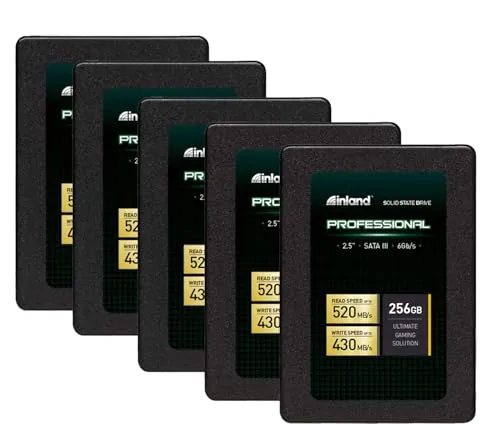
The INLAND Professional 120GB SSD and 256GB SSD 5-Pack are 2.5-inch SATA III drives intended to make compatible desktops and laptops more responsive than systems using mechanical hard drives. The five-pack is the stronger overall choice for buyers who need several drives or more capacity per PC, while the 120GB model is a focused option for a basic single-drive upgrade.
#1 Overall Winner
Contender
Choose the 120GB SSD for a single, low-capacity SATA boot-drive replacement in an older compatible computer. Choose the 256GB 5-Pack if you need to upgrade several systems or want substantially more storage per machine. For heavy sustained writes or critical data without robust backups, neither should be selected solely on the supplied evidence.
Overall winner
Depends on your needs
| Feature | INLAND Professional 120GB SSD | INLAND Professional 256GB SSD 5-Pack | Winner |
|---|---|---|---|
| Package quantity | 1 SSD | 5 SSDs | Depends |
| Capacity per drive | 120GB | 256GB | INLAND Professional 256GB SSD 5-Pack |
| Total listed capacity | 120GB | 1,280GB across five drives | INLAND Professional 256GB SSD 5-Pack |
| Sequential read speed | Up to 520MB/s | Up to 520MB/s | Tie |
| Sequential write speed | Up to 410MB/s | Up to 430MB/s | INLAND Professional 256GB SSD 5-Pack |
| Random read performance | Up to 38K IOPS | Up to 55K IOPS | INLAND Professional 256GB SSD 5-Pack |
| Interface and form factor | SATA III, 2.5-inch | SATA III, 2.5-inch | Tie |
| NAND and resistance | 3D TLC NAND, shock resistant | 3D TLC NAND, shock resistant | Tie |
| Everyday setup | Easy-install feedback | Easy-install feedback | Tie |
| Reliability assessment | Mixed; lower provided score | Mixed; higher provided score | INLAND Professional 256GB SSD 5-Pack |
| Value fit | Single-drive budget upgrade | Multi-drive deployment value | Depends |
| Warranty | 3-year limited parts and labor | 3-year limited parts and labor | Tie |
Both drives should deliver the clear responsiveness gain expected when replacing a mechanical hard drive in a compatible SATA system. Their quoted maximum read speed is identical at 520MB/s. The 256GB model has a modest advantage on paper with up to 430MB/s sequential writes versus 410MB/s for the 120GB drive, plus higher listed random-read performance. In practical terms, the difference is most relevant when comparing the two directly; both are positioned by the supplied reviews as everyday consumer drives rather than sustained-write workstation storage.
The listed sequential read ceiling is tied at 520MB/s. The 256GB drive has the faster stated sequential write rating, at up to 430MB/s versus 410MB/s, and its listed random-read figure is also higher. The provided speed score is the same for both, so the expected everyday difference should be modest. Either should feel considerably faster than a hard drive for booting and application loading in a compatible system.
Reliability is the most important shared caution. Both listings receive positive reports from users who have run drives for months or longer, including multi-drive deployments. At the same time, the supplied summaries cite early failures, freezes, and Windows recognition issues. The five-pack has the higher provided reliability score, but it is not free from those concerns. Keep backups, test a new drive promptly, and avoid treating either as the only copy of important data.
Usability is closely matched. Both products are intended as internal drives for compatible desktops and laptops, and customer feedback repeatedly describes installation as easy. The 120GB single drive is easier to purchase for one machine because there are no unused drives to manage. The 256GB five-pack is more convenient for repeat installations, but its practicality depends on having several compatible systems. Before installation, buyers should verify capacity needs and confirm that their PC supports a 2.5-inch SATA drive.
These are closely matched in physical concept: internal 2.5-inch SATA SSDs for desktops and laptops. The 120GB model is specifically listed at 7mm thick, which is useful for slim compatible laptop bays. The five-pack uses the same 2.5-inch form factor but is designed operationally for multiple installations rather than one system. Neither product has a meaningful visual or ergonomic advantage once installed inside a computer.
Both SSDs use 3D TLC NAND and are described as resistant to shock, vibration, and movement, which are practical advantages over spinning hard drives. The supplied build-quality assessment is slightly higher for the 120GB model, but the difference is small. Review feedback for the product line includes both long-running drives and reports of early failure, so neither model has enough supplied evidence to claim a decisive long-term construction advantage.
Both drives are marketed as resistant to shock, vibration, and movement, making them better suited to physical movement than a traditional hard drive. The 256GB five-pack has the higher supplied durability score, supported by some feedback describing successful use in moved or light server-style systems. However, early-failure reports remain part of the record for this product line, so the difference should not replace a sensible backup strategy.
Each individual SSD uses a compact 2.5-inch internal format, so installed portability is determined mainly by the laptop or desktop rather than the drive. The 120GB model is the simpler item to store and transport because it is one drive. The five-pack has more physical items but is more portable as a deployment kit for several systems. Neither is an external drive in the supplied information.
The core feature set is largely the same: 2.5-inch internal installation, SATA III connectivity, 3D TLC NAND, shock resistance, and silent solid-state operation. The 256GB package differentiates itself through five included drives and greater capacity per drive. That makes it more flexible for multi-system upgrades, whereas the 120GB product is simpler for one replacement task. Neither listing provides smart functions, companion software, or advanced workload-specific features in the supplied information.
Setup is a near tie, with both products receiving strong supplied setup scores and customer comments describing easy connection and installation. The five-pack edges ahead slightly in the provided score, likely because its format is convenient for repeated installations. In either case, buyers may need to clone an old drive or perform a fresh operating-system installation; those procedures and any required cables or mounting hardware are not included in the supplied product information.
Both products are designed for desktops and laptops using a 2.5-inch SATA connection. The five-pack receives the higher provided compatibility score, but the available feedback for both includes instances where Windows 10 did not recognize the drive. Capacity can also affect practical compatibility: 120GB may be enough for a lean operating-system installation, while 256GB per drive gives more room for applications and files. Verify the physical bay, SATA interface, and installation requirements first.
Connectivity is fundamentally the same: each drive uses SATA III 6Gb/s and is intended for compatible desktop and laptop systems. The 256GB five-pack receives a slightly higher supplied connectivity score, but no different port, protocol, or platform feature is listed. Compatibility feedback is mixed for the product line, including reports that Windows 10 did not recognize a drive. Check the computer's SATA connection, drive-bay space, and installation settings before buying.
Both products have the same strong provided power-efficiency assessment and are described as operating without the noise associated with a spinning disk. Review feedback also references low power consumption for the product line. No comparative power-draw figures are provided, so there is no evidence that one should materially improve battery runtime or system energy use more than the other.
Value depends on the purchase scenario rather than price alone. The 120GB model offers a direct, low-capacity route to replacing one old hard drive and receives strong value feedback for that role. The 256GB five-pack earns the higher supplied value score because it provides five drives with more capacity per drive and suits multiple upgrades. It is only better value when the buyer can use the package; for one basic PC, extra drives may add unnecessary cost and complexity.
Both products come from INLAND and carry the same three-year limited parts and labor warranty, so there is no brand-level distinction between them. The five-pack has the higher supplied brand-trust score, but buyer confidence should still account for the mixed reliability feedback across the product line. The review data contains successful longer-term deployments as well as reports of early defects, making backups and prompt testing especially sensible.
Both listings show a supplied Amazon rating of 4.6/5 from 4,669 reviews, with repeated praise for low-cost upgrades, faster startup, and easy installation. The five-pack has the higher customer-satisfaction score in the provided data, likely reflecting its deployment value and larger capacity per drive. Still, satisfaction is moderated for both by recurring reports of early failure, freezing, and occasional Windows detection problems.
Both listings state a three-year limited parts and labor warranty and receive the same supplied warranty-support assessment. No additional details about return handling, replacement procedures, or regional coverage are provided. Buyers should review the seller and manufacturer terms that apply at purchase, particularly because some customer feedback describes early problems that may require a return or warranty claim.
The INLAND Professional 256GB SSD 5-Pack is the best overall option in this comparison. It has the higher supplied overall score, more than twice the capacity per drive, a small listed write-speed advantage, stronger random-read specifications, and better supplied results for reliability, durability, compatibility, value, and customer satisfaction. It makes the most sense for buyers who need several SATA SSDs and can take advantage of the bundle.
The 120GB SSD is still a valid choice for a single, basic replacement drive. It offers the same quoted maximum read speed, the same 2.5-inch SATA format, and the same warranty, while avoiding the excess quantity of a five-pack. Neither is the ideal choice for write-heavy professional work, and both require careful compatibility checks and dependable backups because the supplied reviews include reports of early failure and recognition problems.
Overall winner
Depends on your needs
The 256GB five-pack is the stronger overall option in the supplied scoring because it combines higher per-drive capacity, a slightly higher listed write speed, and better results for value, reliability, durability, compatibility, and customer satisfaction. The 120GB SSD remains the more practical choice when only one low-capacity boot-drive replacement is needed.
Both drives are rated for sequential reads up to 520MB/s over SATA III. The 256GB model has a higher listed sequential write speed of up to 430MB/s, compared with 410MB/s for the 120GB drive. It also lists higher random-read IOPS, although both are aimed at everyday rather than heavy write-intensive use.
Either drive can be a suitable upgrade for a compatible laptop with a 2.5-inch SATA bay. Customer feedback highlights faster startup and easier everyday use compared with older hard drives. Choose the 120GB model for a basic operating-system installation, or choose a 256GB drive when more room for applications and files is important.
The provided review feedback advises against using these drives as scratch disks or for other demanding write-intensive workloads. They are described as consumer SSDs that work well for boot drives and everyday tasks, but buyers handling frequent large file transfers, editing, or workstation workloads should consider a drive designed for those demands.
Yes. The review summaries are generally positive about value, speed, and straightforward installation, but they also include reports of early failure, occasional freezes, and drives not being recognized by Windows 10. Other reviewers report much longer successful use. Maintain current backups and test the drive after installation regardless of which capacity you select.
It depends on whether you can use five separate drives. The listing earns a strong value assessment because it supplies five 256GB SSDs and is suited to multi-system upgrades. For one computer, the extra drives may not be useful, so the single 120GB model can be the more appropriate purchase if its capacity is sufficient.
There is no meaningful installation advantage between them in the supplied data. Both are 2.5-inch internal SATA SSDs for desktops and laptops, and both receive strong setup and usability assessments. Customer feedback repeatedly describes the drives as easy to connect. Confirm that the computer has a compatible SATA connection and physical drive bay before ordering.
Check our rankings and expert guides to find the best electronics products for your goals.