ElectronicsRanker
Menu
INLAND Professional 120GB vs 1TB SATA SSD Comparison

Comparison

INLAND Professional 120GB vs 1TB SATA SSD Comparison

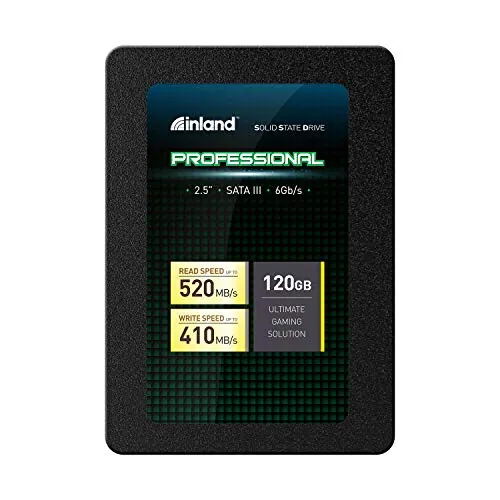
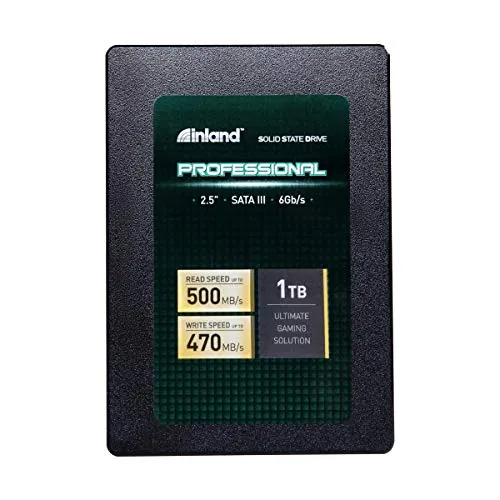
The INLAND Professional 120GB and 1TB are 2.5-inch SATA III SSDs designed to upgrade compatible desktops and laptops. The 1TB version is the stronger all-round option for storage, stated write speed, endurance, and overall assessment, while the 120GB drive is the more budget-focused pick for a light boot-drive upgrade.

Expert tested Data driven Unbiased reviews Updated 2 August 2026
INLAND Professional 120GB SSD 3D NAND SATA III 6Gb/s 2.5-inch Internal Solid State Drive

#1 Overall Winner

INLAND Professional 120GB SSD 3D NAND SATA III 6Gb/s 2.5-inch Internal Solid State Drive

72/100
  • Lower listed price and stronger entry-level value assessment.
View review
INLAND Professional 1TB SSD 3D NAND SATA III 6Gb/s 2.5-inch Internal Solid State Drive

Contender

INLAND Professional 1TB SSD 3D NAND SATA III 6Gb/s 2.5-inch Internal Solid State Drive

76/100
  • 1TB capacity provides substantially more room for an operating system, applications, and files.
View review

Quick verdict

Choose the 120GB SSD for a low-cost replacement drive or a light operating-system installation. Choose the 1TB SSD for most users who need room for applications and files, want faster stated writes, and prefer the stronger all-round assessment. Confirm SATA and 2.5-inch bay compatibility before buying either model.

Overall winner

Depends on your needs

At-a-glance comparison

Feature INLAND Professional 120GB SSD 3D NAND SATA III 6Gb/s 2.5-inch Internal Solid State Drive INLAND Professional 1TB SSD 3D NAND SATA III 6Gb/s 2.5-inch Internal Solid State Drive Winner

Capacity

120GB

1TB

INLAND Professional 1TB SSD 3D NAND SATA III 6Gb/s 2.5-inch Internal Solid State Drive

Listed price

37.99

155.99

INLAND Professional 120GB SSD 3D NAND SATA III 6Gb/s 2.5-inch Internal Solid State Drive

Sequential read

Up to 520MB/s

Up to 500MB/s

INLAND Professional 120GB SSD 3D NAND SATA III 6Gb/s 2.5-inch Internal Solid State Drive

Sequential write

Up to 410MB/s

Up to 470MB/s

INLAND Professional 1TB SSD 3D NAND SATA III 6Gb/s 2.5-inch Internal Solid State Drive

Random performance

Up to 38k/80k 4K read/write IOPS

Up to 70,000 4K IOPS

Depends

Stated endurance

Not provided

Up to 660TBW

INLAND Professional 1TB SSD 3D NAND SATA III 6Gb/s 2.5-inch Internal Solid State Drive

Interface and form factor

SATA III, 2.5-inch, 7mm

SATA III, 2.5-inch, 7mm

Tie

NAND and physical resistance

3D TLC; shock and vibration resistant

3D TLC; shock and vibration resistant

Tie

Overall assessment

72

76

INLAND Professional 1TB SSD 3D NAND SATA III 6Gb/s 2.5-inch Internal Solid State Drive

Value assessment

84

81

INLAND Professional 120GB SSD 3D NAND SATA III 6Gb/s 2.5-inch Internal Solid State Drive

Customer reviews

4.6/5 from 4,669 reviews

4.6/5 from 4,669 reviews

Tie

Warranty

3-year limited parts and labor

3-year limited parts and labor

Tie

Detailed comparison

Performance

The 1TB SSD has the stronger performance assessment and leads on stated sequential writes, at up to 470MB/s compared with 410MB/s for the 120GB model. The 120GB drive has a small stated advantage in sequential reads, up to 520MB/s versus 500MB/s. In practical terms, both are designed to improve boot and application-loading performance over a hard drive, but the 1TB drive is the more capable choice where storage space and write performance matter together.

Speed

The speed result depends on the workload. The 120GB SSD lists the higher maximum sequential read speed, up to 520MB/s, which can benefit read-oriented tasks. The 1TB SSD lists higher sequential writes, up to 470MB/s, and has the higher speed assessment. Since real performance can vary with system hardware and configuration, these figures should be treated as stated maximums rather than guaranteed results.

Reliability

The 1TB SSD has the higher reliability assessment and a stated endurance rating of up to 660TBW. However, neither model has an unqualified reliability advantage in the supplied customer feedback: the shared overview includes both reports of drives lasting and reports of failures within three months. Back up important data and test the drive promptly during the return period.

INLAND Professional 120GB SSD 3D NAND SATA III 6Gb/s 2.5-inch Internal Solid State Drive

Pros

  • Lower listed price and stronger entry-level value assessment.
  • Up to 520MB/s sequential reads and 410MB/s sequential writes.
  • Compact 2.5-inch, 7mm SATA form factor for compatible desktop and laptop upgrades.
  • 3D TLC NAND with stated resistance to shock, vibration, and movement.
  • Easy-installation feedback and positive reports of faster boot and startup performance.
  • Three-year limited parts and labor warranty.

Cons

  • 120GB capacity is restrictive for larger application libraries and file collections.
  • Lower stated sequential write speed than the 1TB model.
  • Mixed customer feedback includes reports of early failures.
  • Some buyers report Windows 10 recognition issues.
  • Provided review feedback suggests avoiding demanding, write-intensive workloads.
  • Its listed 4K random read/write figures are lower than the capacity available from the 1TB model.
INLAND Professional 120GB SSD 3D NAND SATA III 6Gb/s 2.5-inch Internal Solid State Drive

INLAND Professional 1TB SSD 3D NAND SATA III 6Gb/s 2.5-inch Internal Solid State Drive

Pros

  • 1TB capacity provides substantially more room for an operating system, applications, and files.
  • Higher stated sequential write speed of up to 470MB/s.
  • Stated endurance of up to 660TBW.
  • Up to 70,000 random 4K IOPS is listed for the drive.
  • 2.5-inch, 7mm SATA design supports compatible desktops, laptops, and Macs.
  • Higher overall, performance, usability, reliability, and customer-satisfaction assessments.

Cons

  • Higher listed price than the 120GB model.
  • Stated sequential read speed is slightly lower at up to 500MB/s versus 520MB/s.
  • Mixed customer feedback includes reports of early failures.
  • Some buyers report Windows 10 recognition issues.
  • Provided review feedback indicates the Professional range is less suited to demanding write-intensive work.
  • Like the 120GB version, it uses SATA rather than a newer interface.
INLAND Professional 1TB SSD 3D NAND SATA III 6Gb/s 2.5-inch Internal Solid State Drive

Final verdict

The INLAND Professional 1TB SATA SSD is the best overall option between these two capacities. It offers dramatically more storage in the same 2.5-inch, 7mm SATA format, plus higher stated sequential write speed, stated endurance of up to 660TBW, and better assessments for overall performance, reliability, durability, compatibility, and satisfaction. It is the more practical drive for most everyday systems because 120GB can become restrictive quickly.

The 120GB model is still worth considering as a focused budget upgrade. It has a lower listed price, a slightly higher stated maximum read speed, and a stronger value assessment for light-use buyers. Neither drive is the clearest choice for demanding write-heavy work based on the provided review context. Whichever capacity you choose, verify SATA compatibility, test recognition after installation, and keep important data backed up.

Overall winner

Depends on your needs

Frequently asked questions

<p>Which is better: the INLAND Professional 120GB SSD or the 1TB SSD?</p>

The 1TB model is the better overall choice in the supplied scoring because it combines far greater capacity with stronger performance, usability, reliability, durability, compatibility, and customer-satisfaction assessments. The 120GB model remains the more practical choice when a small, lower-cost SATA boot-drive upgrade is all that is needed.

<p>Does the 1TB INLAND Professional SSD have better performance?</p>

The 1TB version has the stronger performance assessment and a higher stated sequential write speed, up to 470MB/s versus 410MB/s. It also lists up to 70,000 random 4K IOPS. The 120GB version has a slightly higher stated sequential read speed, up to 520MB/s versus 500MB/s.

<p>Which INLAND SSD offers more storage value?</p>

The 120GB drive has the stronger value assessment for a low-cost, basic upgrade and carries the lower listed price. The 1TB model costs more but offers substantially more space, plus higher stated write speed and stated endurance. The better value depends on whether 120GB is sufficient for the intended system.

<p>Are these SSDs compatible with laptops and desktops?</p>

Both drives use a 2.5-inch, 7mm SATA III form factor and are listed for compatible laptops and desktops. The 1TB model also lists PC and Mac compatibility. Buyers should still confirm that their device has a 2.5-inch SATA bay and supports the required physical thickness before ordering.

<p>Are the INLAND Professional SSDs easy to install?</p>

Both models receive strong setup and usability assessments, and the supplied customer overview says installation is easy. They are internal SATA drives, so installation still requires a compatible bay and SATA connection. Some feedback mentions Windows 10 recognition issues, making it sensible to verify detection before transferring important data.

<p>Which drive is better as an operating-system boot drive?</p>

Both drives can serve as an operating-system boot drive, and supplied feedback highlights improved startup performance and fast read speeds. Choose the 120GB model for a light installation with limited files. Choose the 1TB model when the operating system, applications, updates, and personal data need to coexist on the same drive.

<p>Are these INLAND SATA SSDs suitable for write-intensive workloads?</p>

The provided review feedback characterizes this range as better suited to consumer and lighter everyday use than heavy write-intensive tasks, such as frequent large-file movement or use as a video-editing scratch drive. The 1TB model has a stated endurance figure of up to 660TBW, but neither drive should be selected for demanding workloads based solely on the supplied information.

<p>Which model has better reliability?</p>

The 1TB SSD has the higher reliability and durability assessments, and it provides a stated endurance rating of up to 660TBW. However, the supplied customer overview for both listings includes reports of some drives failing within three months. Keep current backups regardless of which capacity you choose.

Related comparisons

Still not sure which one to choose?

Check our rankings and expert guides to find the best electronics products for your goals.

View all rankings